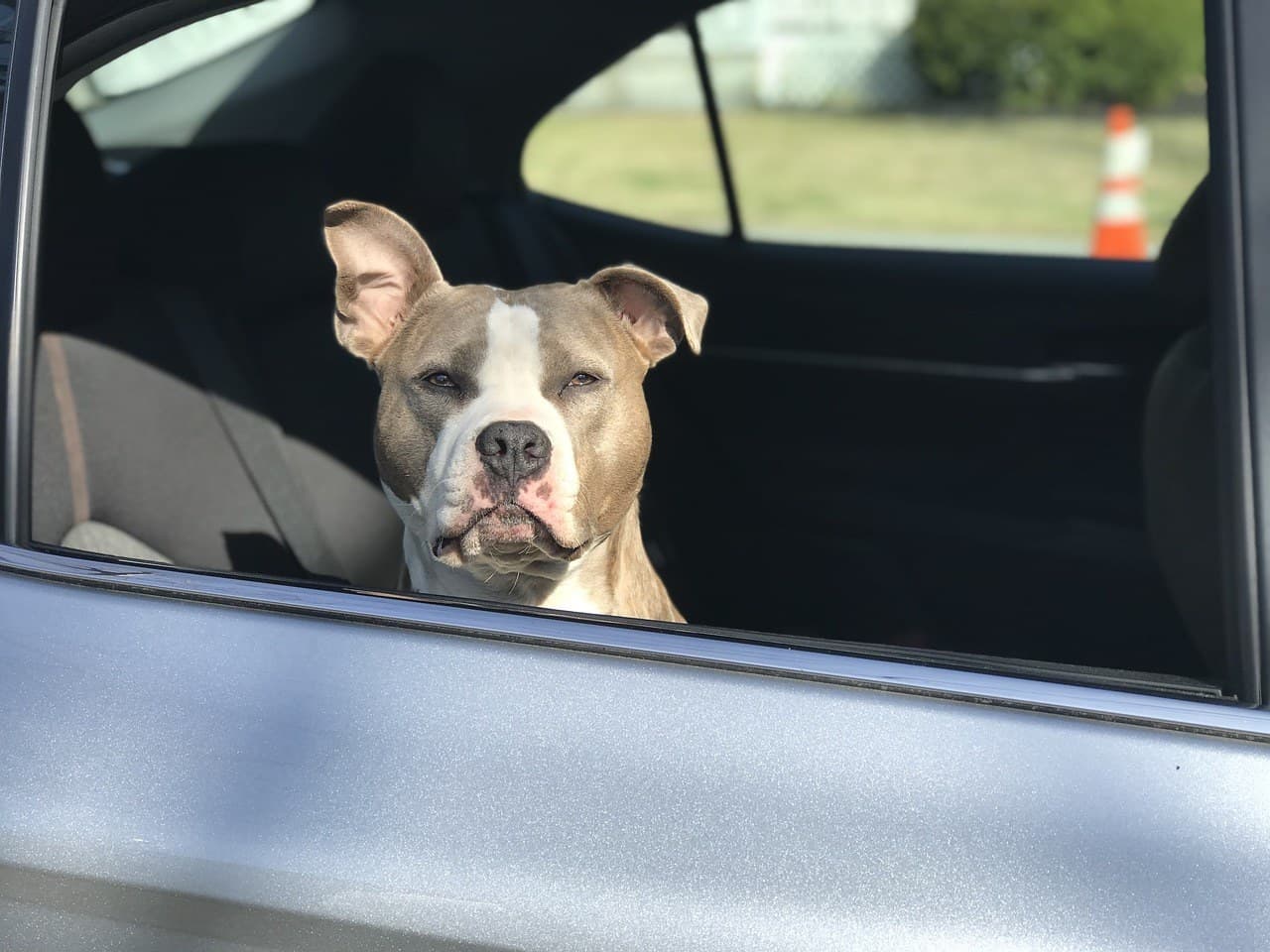
Car sickness and anxiety: two different problems, and the solution starts with knowing which one you're dealing with
If every car ride ends with you cleaning the back seat, or your dog starts panting, trembling and whimpering the moment they see the keys, you've got a problem — maybe two — that can be fixed. The key is understanding exactly what's going on, because car sickness and car anxiety are not the same thing, even though the symptoms look remarkably similar, even though they sometimes coexist in the same dog, and even though confusing the two is, by far, the most common mistake people make before seeking help.
This article gets straight to the point. First, it helps you identify what your travel companion is actually going through. Then, what to do about each problem. And along the way, which products can genuinely help — because some really do work, and others are a waste of money.
Stick around to the end even if you think you only have the sickness problem, or only the anxiety one. They're two sides of the same coin and almost always feed into each other.
Sickness and anxiety: two different problems that often go hand in hand
Car sickness — technically canine motion sickness — is a physical problem. Your dog's inner ear doesn't process movement signals properly when travelling: the eyes see a static interior while the inner ear detects motion, and that sensory contradiction causes nausea. It's exactly the same thing that happens to a person on a boat or on a winding mountain road. It has nothing to do with temperament or training — it's physiology.
Car anxiety is something else entirely. Your dog has learned to associate the car with something negative — a vet visit, a frightening experience, the puppy sickness they no longer consciously remember but whose memory lives in their body — and that association triggers fear or stress at the sight of the stimulus. We're talking about classical conditioning: the car becomes a trigger for a negative emotional response.
What makes diagnosis tricky is that both problems can coexist and fuel each other. A dog that got carsick as a puppy may have developed car anxiety even after the sickness disappeared. And an anxious dog has an activated nervous system, which can make nausea during travel worse. The vicious cycle is real and surprisingly common.
That's why, before doing anything else, the first step is to observe your dog carefully and figure out what's actually happening.
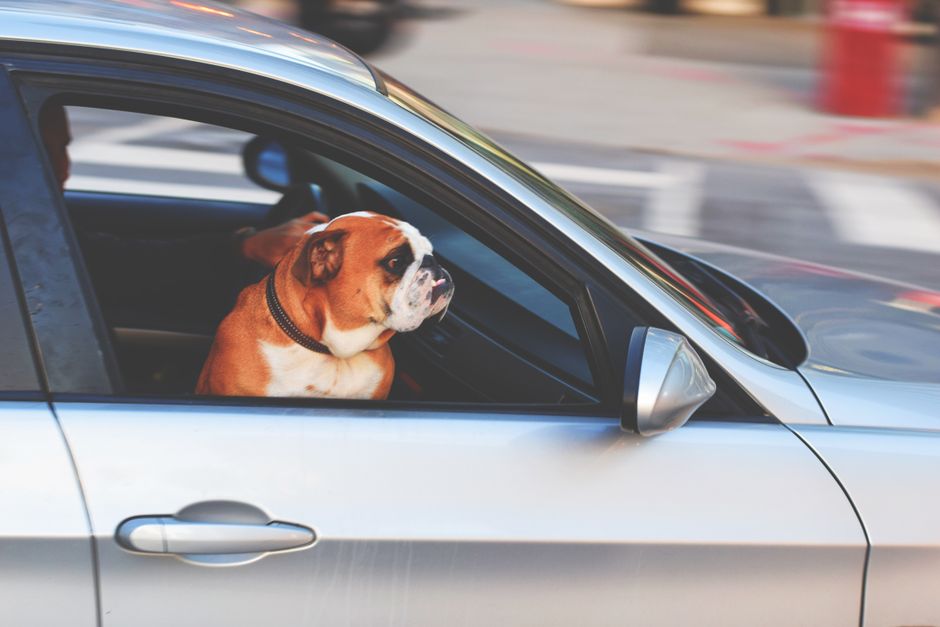
What's really going on? The signs that tell you everything
The key is when the symptoms appear and what they look like. That's what tells you whether you're dealing with sickness, anxiety, or both at once.
Signs of car sickness (canine motion sickness)
Dogs don't turn green like humans do, but there are some pretty clear signs:
- Excessive and sudden drooling
- Vomiting (with or without warning)
- Repeated yawning that seems out of place
- Frequent lip-licking
- Hunched posture, as if shrinking into themselves
- Inactivity or listlessness during the journey
- Wide eyes, tense facial muscles
- Panting even when it's not hot
Car sickness appears with movement. If your dog is fine while the car is stationary and starts to fall apart as soon as you pull away, the chances are high that you're looking at motion sickness.
Signs of car anxiety
- Heavy panting from before you even set off — or even before getting in
- Trembling
- Continuous whining or whimpering
- Trying to escape, hiding under the seat, or climbing on top of you
- Destructive behaviour inside the car
- Refusing to get in even before the engine starts
- Heavy drooling (yes, just like with sickness — this is where the overlap gets confusing)
- Panting and agitation at the sight of the keys or lead when they sense a trip is coming
The single most important clue: if your dog starts getting stressed before the car moves, that's not sickness. That's anxiety. Motion sickness needs movement to kick in. Anxiety can appear the moment your dog picks up on the sequence of signals they associate with "we're getting in the car."
When both problems are present, things get more complicated: the dog may be anxious before you've even started the engine, then get carsick during the journey. Both need to be addressed — but in the right order.
Why some dogs get carsick and others don't
Canine motion sickness is far more common than most people realise. According to some veterinary studies, it affects nearly half of all dogs at some point in their lives, especially during puppyhood.
The main reason in puppies is that the inner ear isn't fully developed until close to one year of age. That immaturity makes processing movement more chaotic, and nausea sets in easily. The good news is that many dogs improve on their own as they mature — especially if during that period they're gradually and positively exposed to car travel.
There are factors that make sickness worse in any dog, regardless of age:
A full stomach. Setting off with a dog who's just had a full meal is one of the most common causes of vomiting in the car. The movement churns the stomach contents, and you already know how that ends.
Heat and poor ventilation. A closed, warm space triggers nausea. The smell of hot plastic, strong air fresheners or petrol fumes can bring on sickness even before you've left the neighbourhood.
Not being able to see the horizon. Small dogs and puppies, who travel at seat level or on the floor, can't see out of the windows. Without a visual reference point, the inner ear has to work harder. A raised booster seat can make a real difference in these cases.
Mountain roads or routes with lots of bends. There's not much you can do here except drive more smoothly and make more stops.
Stress and nervousness. An activated nervous system makes the physical response to movement worse. If your dog is already anxious in the car, sickness intensifies. Another reason why both problems need to be tackled together.
How to help a dog that gets carsick
Good news: car sickness is treatable. With some simple adjustments to your travel routine and, if needed, the support of specific products, most dogs improve considerably.
Before you set off
Respect the pre-travel fast. Don't give a full meal in the 2–3 hours before the journey. An empty stomach dramatically reduces the likelihood of vomiting. If it's a very long trip and your dog needs something, keep it small and leave plenty of time before departing.
Air out the car before putting your dog in. Open the doors for a while and let the air circulate. The smell that builds up in a closed car is one of the factors most people overlook.
A 20-minute walk beforehand works wonders. Get to the car with your dog a little tired and their nervous system calmer. It's not a complete fix, but on longer journeys it makes a noticeable difference.
If your small dog travels in the back seat, make sure they can see outside. An approved booster seat serves two purposes: safety on the road and reducing the sensory conflict that causes sickness.
During the journey
Drive smoothly. Sudden acceleration, hard braking and fast cornering all multiply nausea. If you know your companion struggles, adjust your driving style a little. It's absolutely worth it.
Keep the car cool. Air conditioning or open windows — whatever you have — but don't let it get warm inside. Heat makes sickness worse, every single time.
Take frequent breaks on long journeys. Every hour and a half to two hours, stop, get your dog out, let them walk around and breathe fresh air. Those few minutes on solid ground do a remarkable job of resetting them and breaking the cycle of accumulated nausea.
Don't let them face backwards in the boot. Watching the scenery rush away behind the car is one of the most sickness-inducing visual experiences for a dog. If they travel in the boot, a divider that blocks the rear view helps.
Natural remedies
Ginger has some evidence behind it for reducing nausea in dogs. You can find it in pet-specific snack formats or capsules. It's not a miracle cure, but it does help some dogs and has no significant side effects when used at the right dose.
Synthetic pheromones — the best-known product being Adaptil — mimic the calming pheromones released by the mother during nursing. They have a soothing effect that can help both with sickness (by reducing the stress that makes it worse) and with anxiety itself. They come as a spray for the car interior, a collar and a plug-in diffuser.
One nuance that rarely gets explained: Adaptil works best in dogs that had enough time with their mother. If your dog was weaned too early, the maternal imprinting may not be well established and the product has nothing to build on. That's not a failure on your part or the product's — it simply doesn't fit every case.
Veterinary medication
There is specific medication for canine motion sickness — not designed for humans, but developed specifically for dogs — that works on the inner ear and effectively reduces nausea. It's a very valid option for long journeys or dogs with severe sickness while the underlying issue is being worked on over time.
We won't recommend any specific active ingredient here: that's your vet's job, since they know your dog, their history and can assess the right dose and any contraindications. What you can do is go to the appointment with clear information about what's happening (when it starts, which symptoms, which types of journey) so the assessment can be as accurate as possible.
Products that help with car sickness
Plenty of things are sold as miracle solutions for canine motion sickness and simply aren't. These ones actually work — with caveats:
Raised booster seat for dogs For small dogs and puppies travelling without a view of the horizon, a booster seat with seatbelt attachment genuinely changes things. The dog travels safely, can see out of the window, and the inner ear has more visual information to work with. Look for one with proper approved restraints — not just for the sickness, but because in a sudden stop it could save your dog's life.
Anti-nausea or ginger supplement for dogs There are pet-specific brands that combine ginger with other natural ingredients (mint, chamomile) in snack or tablet form. Much easier to give than a capsule and far more appealing to your dog. Give it 30–45 minutes before the journey.
Adaptil spray For applying inside the car or in the carrier 15 minutes before your dog gets in. The effect is gentle but real, especially when combined with other measures. It's the most practical format for car use compared to the collar or diffuser.
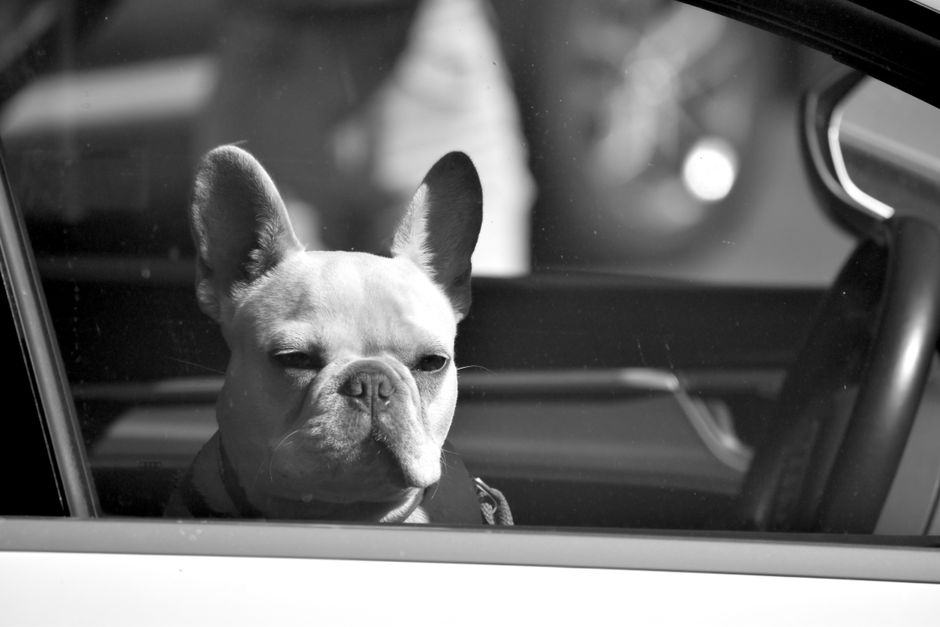
Why your dog has car anxiety — and it's not a drama, it makes complete sense
Car anxiety isn't irrational behaviour or a personality flaw. It's learned. Your dog has accumulated experiences that tell them the car comes before something bad, uncomfortable or out of their control, and their nervous system has done exactly what it's supposed to do: learned to sound the alarm at that trigger.
The most common causes:
The vet as the only destination. For many dogs, the car means a waiting room full of other anxious animals, strange smells and uncomfortable handling. If every single car journey ends at the vet's, the negative association forms on its own — you haven't done anything wrong.
A fright or accident. A sudden brake, a firework going off on the road, an incident that badly scared your dog while in the car. A single very negative experience can leave a lasting mark.
Puppy sickness. This is the most common link between the two problems. A dog that got severely carsick as a puppy may have grown out of the motion sickness, but the anxiety caused by those experiences of feeling unwell can persist long after the physical sickness is gone.
Being thrown in at the deep end. A puppy taken on a two-hour journey for their very first car trip has every chance of forming negative associations, even if they didn't get sick.
The good news is that car anxiety can be changed. Not necessarily quickly or easily, but it can be changed. The process is called progressive desensitisation, and we'll walk you through it step by step below.
The process for working through anxiety: how it's really done, with no shortcuts
Let's be straight with you: there are no shortcuts. If you try to speed things up because "today seemed to go well," you'll almost certainly end up going backwards several steps. Progressive desensitisation works precisely because you respect your dog's pace, not yours.
The goal of the process is twofold: to stop the car being a fear trigger, and to build positive associations with it. These are two parallel processes — known as counter-conditioning — and combining them is what makes the change last.
One golden rule before you begin: never move on to the next phase until the current one is solid. Solid doesn't mean "they did well today." It means several consecutive days with no signs of stress in that phase.
Phase 1 — Car parked, you outside
Start even before approaching the car. If your dog has intense anxiety, the mere sight of the car from the pavement might set off the alarm bells. In that case, start at a distance. Every time they look at the car, treat. Every time they take a step towards it, treat. No pressure, no pulling on the lead, no trying to guide them towards it. Let them take the initiative.
Keep sessions short — 5 to 10 minutes — and repeat over several days.
Phase 2 — Approaching and exploring the outside of the car
Once your dog approaches the car without hesitation and without signs of stress, the next step is for them to explore it from the outside. Let them sniff it, walk around the wheels, get close to the doors. Treat every voluntary approach. The goal is for the car to become a neutral or positive object, not a threat.
Phase 3 — Doors open, voluntary exploration
Open the doors and let your dog decide whether they want to poke their head in or climb up. Don't invite them with the lead or lift them in. If they approach on their own and sniff the interior, big reward. If they're not ready to come closer, give it time and go back a step.
The trick here is a Kong or a favourite toy that appears inside the car and is only ever available in this context. Start making the car mean "good things happen here."
Phase 4 — Inside the car, engine off
Once they're getting in without hesitation, the next step is having them stay inside for a while with the doors open and the engine off. Sit in there with them. Reward calm behaviour, speak in a relaxed tone. If you have someone who can help, even better: one person at the wheel and one next to the dog in the back seat.
Only close the doors once your dog has spent several days getting in and staying there with absolutely no signs of stress.
Phase 5 — Engine on, car stationary
Turn the engine on. Don't pull away, don't move. Just the noise and vibration of the running engine. If your dog is calm, treat. If they're stressed, you've moved too fast: turn the engine off and go back to the previous phase without making a big deal of it. It happens.
Once the sound of the engine is completely unremarkable to your dog, you can add the next element: closing the doors with the engine running. Then sitting at the wheel while the dog is in their spot. Then other car sounds (the horn from outside, the indicators).
Phase 6 — First journey: literally one minute
One minute. Pull out of the garage or car park, go round the block and come back. Massive reward. Your dog should get out of the car with positive energy and no signs of emotional exhaustion.
From here, gradually increase the duration: two minutes, five, ten, twenty. There's no universal pace — it depends on the dog. What is universal is that every session should end on a good note. If you notice signs of stress during any journey, stop before the bad experience gets reinforced.
The most common mistake
Speeding up when things seem to be going well. "They were brilliant today — let's try an hour tomorrow." It's the most common trap and almost always means starting over.
If you've been working through the process for weeks without making progress, or if your dog's anxiety is very intense from the start (strong trembling, attempts to escape, unable to take treats near the car), consider finding an animal behaviourist or canine trainer specialising in behaviour modification. That's not giving up — it's being smart and not wasting months going round in circles.
Products that help manage car anxiety
None of these is a solution on its own: they're supports that make the process easier. Used alongside behavioural work, they do make a difference.
Adaptil collar (small size · medium/large size) The calming pheromones in collar form work continuously throughout the day. Useful if your dog's anxiety isn't limited to the car but is more general or crops up in different situations. Start using it several days before beginning the desensitisation process so your dog arrives with a slightly calmer nervous system.
Natural calming spray An alternative to synthetic pheromones, based on valerian and other plants with a calming effect. Many owners combine it with Adaptil or use it when Adaptil hasn't worked. Apply it to the carrier or the seat before the journey — never directly onto the dog.
Zylkene (hydrolysed casein) An oral supplement that comes as a powder to mix into food. It acts on the brain's GABA receptors with a gentle calming effect. It doesn't cause sedation and can be used daily during the desensitisation process to help your dog start from a lower stress baseline. Check with your vet for the right dose.
Calming chews for dogs A practical option for dogs that won't take capsules or powders: calming chews are given like a treat, with no struggle. Most combine natural ingredients — valerian, chamomile, L-tryptophan — for a gentle, non-sedating effect. You can give them before a journey or as support during desensitisation sessions.
Carrier/crate For many dogs, a carrier is the opposite of a cage: it's their safe space. A dog that already associates their carrier with calm and rest travels far better than one roaming loose or strapped into a space that doesn't feel like their own. If your dog doesn't have a carrier or isn't used to one, work on getting them comfortable with it at home first, then introduce it into the car process.
Approved safety harness Not a product specifically for anxiety, but it does help: a dog that's properly secured in their space is less likely to spiral by moving around the car, and you can drive with a clearer head. Look for one with genuine crash-test certification — there are plenty on the market that call themselves "safety" harnesses but have never been tested in a real impact.
When you need to go straight to the vet, no question
Some situations need a vet appointment before trying anything else. Go to the vet if:
- Your dog vomits on every single journey, even very short ones, even when you're doing everything right
- The sickness isn't improving after several weeks of taking the basic measures
- The anxiety is so intense that you can't even begin to work on it: they won't take treats near the car, the trembling is severe, they try to escape or show aggression
- You suspect there might be an ear problem (middle or inner ear infections can significantly worsen motion sickness)
- You want to explore medication so that the behavioural work can actually get off the ground
- Your dog is showing other worrying signs: loss of appetite, lethargy, behaviour changes outside of the car context
Medication for anxiety — when it's appropriate — isn't giving up or taking the easy way out. In many cases it's exactly the tool that makes the desensitisation process possible: a dog needs to be below their stress threshold to be able to learn, and if the anxiety is severe, getting there without some pharmacological support is nearly impossible. Your vet can advise on what makes sense for your specific dog.
Frequently asked questions
Can I give my dog Dramamine?
Dimenhydrinate — the active ingredient in Dramamine — has been used in veterinary practice, but it's not formulated for dogs, and the correct dose, if there even is one for your dog, needs to be calculated by a vet. Don't administer it yourself even if you've seen it recommended on forums or Facebook groups. There are alternatives specifically designed for dogs that work better and carry less risk of side effects.
How long does it take for a dog to get over car anxiety?
It depends on the dog, the intensity of the anxiety and how consistently you work through the process. Some dogs improve within a few weeks; others need several months. What doesn't change is that without systematic, progressive work, anxiety doesn't resolve on its own — in fact, it tends to intensify over time. The good news is that once the process starts working, the progress is visible and genuinely motivating.
Why does my dog tremble in the car?
Trembling in the car is almost always a sign of anxiety or severe physical discomfort. If the trembling starts before the car moves, or as soon as the dog anticipates the journey, it's anxiety. If it starts during the drive and comes with other physical symptoms, it could be intense motion sickness. Either way, if the trembling is frequent or very pronounced, a vet visit is worth it to rule out physical causes.
My dog won't get in the car. What do I do?
Don't force them. Forcing an anxious dog into the car only reinforces the negative association. Start the desensitisation process from the very beginning — phase 1, car parked, no pressure — and work from there. If the refusal is absolute and very intense, speak to a behaviourist before going any further.
Does Adaptil work for motion sickness?
Not directly. Adaptil works on the nervous system and reduces alertness and stress, which can ease the anxiety component that makes sickness worse. But it has no effect on motion sickness as a physical problem. If your dog gets carsick but isn't anxious, Adaptil won't be the answer.
Do puppies grow out of car sickness on their own?
Many do. The inner ear matures around one year of age and motion sickness improves or disappears in a good number of cases. But "on their own" comes with a catch: if during that period the puppy has several very negative experiences in the car, they can develop anxiety that persists even after the physical sickness has gone. The ideal approach is to expose puppies to car travel gradually and positively from an early age — even if they do get a bit sick — so they don't end up associating the car with feeling awful.
My dog drools a lot in the car. Is it sickness or anxiety?
Excessive drooling appears in both. The clue is timing: if they're drooling from the moment they see the keys or before you've set off, anxiety is the more likely cause. If the drooling starts with movement and increases as the journey goes on, it points more towards sickness. If you're unsure, look at the full picture of symptoms in context, and if the pattern still isn't clear, ask your vet.
My dog cries in the car. When is that normal?
It's not "normal" in the sense of "nothing to worry about," but it is common. Whimpering can be a sign of anxiety (especially if it starts before you've set off), of sickness (if it appears during the journey alongside drooling or odd postures), or simply of excitement in dogs that love the car and can barely contain themselves. Context tells you everything: a dog crying happily with a wagging tail is a very different picture from one crying while hunched up with wide, tense eyes.
Does your dog travel fine but finding pet-welcoming places to stay is the real challenge? Head to Where to sleep? for the complete directory of pet-friendly accommodation across Spain, filtered by region, type and pet policy.