A dog car booster seat is one of those products that tends to cause confusion — is it just a luxury item, or does it actually make sense? The short answer is: it depends on the dog. For some, it makes a lot of sense. For others, it's completely unnecessary.
This guide explains exactly what a booster seat does, when it's worth getting one, and what you need to know before buying.
What is a dog car booster seat?
A booster seat is a raised structure that sits on top of a car seat (usually in the back) and lifts your dog up so they can comfortably see out of the window. They're typically cube or bucket-shaped with padded walls, secured to the seat with straps that thread through the seatbelt, and include an internal anchor point to attach your dog's harness.
This isn't just a comfort accessory. If the booster seat has the harness properly connected to the seatbelt, it meets road safety regulations — just like a conventional harness or a travel crate.
The difference compared to simply placing your dog on the back seat with a harness? The booster lifts them to a height where they have an outside view, which can reduce motion sickness and anxiety in some dogs who struggle when they can't see the horizon.
Which dogs actually benefit from one
A booster seat isn't for every dog. It's especially useful for:
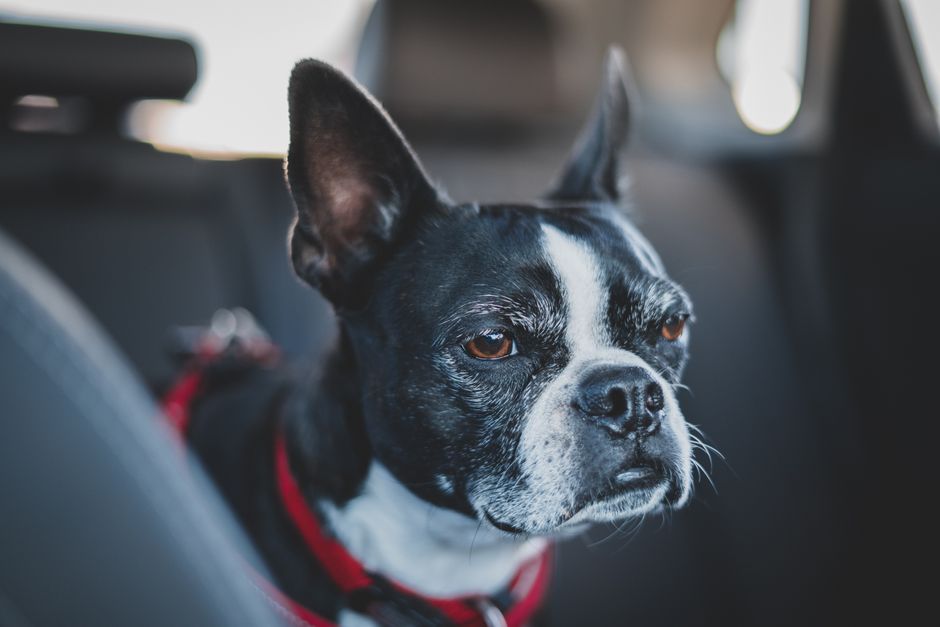
Small dogs that get carsick. Motion sickness has a vestibular cause — the brain receives movement signals that don't match what the eyes are seeing. Elevating your dog so they can see the horizon and the outside world can help reduce that disconnect. It's not a guaranteed fix, but in many small dogs it makes a real difference. If your pup has this problem, it's also worth checking out the guide on anxiety and motion sickness in the car.
Small dogs with car anxiety. Some small dogs get more stressed when they can't see what's happening around them. A booster gives them perspective and, in many cases, genuinely calms them down.
Small dogs that struggle to adapt to a travel crate. If your dog refuses a crate and a harness alone doesn't give them enough visibility, a booster seat can be the perfect middle-ground solution.
The common thread here is "small dogs." Booster seats are designed for dogs up to around 7–10 kg maximum. Above that weight, the seat's anchoring system isn't secure enough, and the booster itself can become a hazard in the event of an impact.
Which dogs don't need one
Medium or large dogs. A dog weighing 15 kg or more should not be using a booster seat — the anchoring simply isn't designed for that weight, and the risk in a crash is very real.
Dogs that travel well in the back seat with a harness. If your dog is calm, doesn't get carsick, and the harness is working fine, you don't need a booster. There's nothing to fix.
Dogs that travel in a crate or behind a boot barrier. A booster seat is an alternative to a harness-on-seat setup, not a complement to those other systems.
How the restraint system works
A booster seat attaches to the car seat in two main ways:
Straps that loop through the headrest and around the seat back. The most common method — they're adjusted to keep the booster from shifting sideways.
A lower strap that passes under the seat. Some models add this extra anchor point for greater stability.
Once the booster is secured to the seat, your dog goes inside wearing their harness (a regular walking harness works fine, though a travel harness is even better) clipped to the booster's internal anchor point, which in turn connects to the seatbelt.
The safety chain works like this: dog's harness → booster anchor point → car seatbelt. If that chain is complete and everything is properly adjusted, the system is compliant.
What to look for before buying
Weight limit: always check the maximum weight the model supports. Most are rated from 0 to 7 kg; some go up to 10 kg. Don't push it — this is a real safety limit, not just a suggestion.
Seat anchoring system: the more attachment points, the more stable. Models that only use headrest straps are less stable than those that also anchor underneath the seat.
Internal anchor point: this should be solid and metal, not cheap plastic. It's the point that holds your dog back if there's an impact.
Padding and materials: your dog is going to be sitting in there for the whole journey. Comfort and washability matter more than you'd think — fur, drool, and motion sickness are a common combination.
Size: the booster should be big enough for your dog to sit comfortably inside, but not so large that they're rattling around. Always check the internal dimensions of the model.
Common mistakes
Using it without clipping the harness to the anchor point. A booster without the harness connected is just a comfort accessory — it doesn't meet road safety requirements and won't protect your dog in a crash.
Buying one for a dog that's too heavy. The weight limit exists for engineering reasons. A 12 kg dog in a booster designed for 7 kg is a genuine risk.
Not securing it properly to the seat. If the booster shifts sideways easily, the straps aren't tightened correctly. An unstable booster can tip over on a bend.
Placing it in the front passenger seat. The front airbag is incompatible with any dog restraint system, including a booster seat. Always in the back seat.
Alternatives if a booster seat isn't right for you
If your dog is small but won't accept a booster, or if they're over the weight limit, the alternatives are:
- An approved travel harness in the back seat: no elevation, but proper restraint. See the guide to dog car harnesses.
- A soft travel crate in the back seat: more containment, less outside visibility. See the guide to dog travel crates.
The bottom line
A booster seat is a great solution for small dogs (up to 7–10 kg) that get carsick, suffer from car anxiety, or simply travel better when they can see outside. It's not a luxury if it solves a real problem — and for small dogs prone to motion sickness, it can sometimes be the only thing that actually works.
For medium or large dogs, there are better-suited options. The guide on travelling with your dog in the car has a full breakdown to help you choose based on your dog's size and temperament.