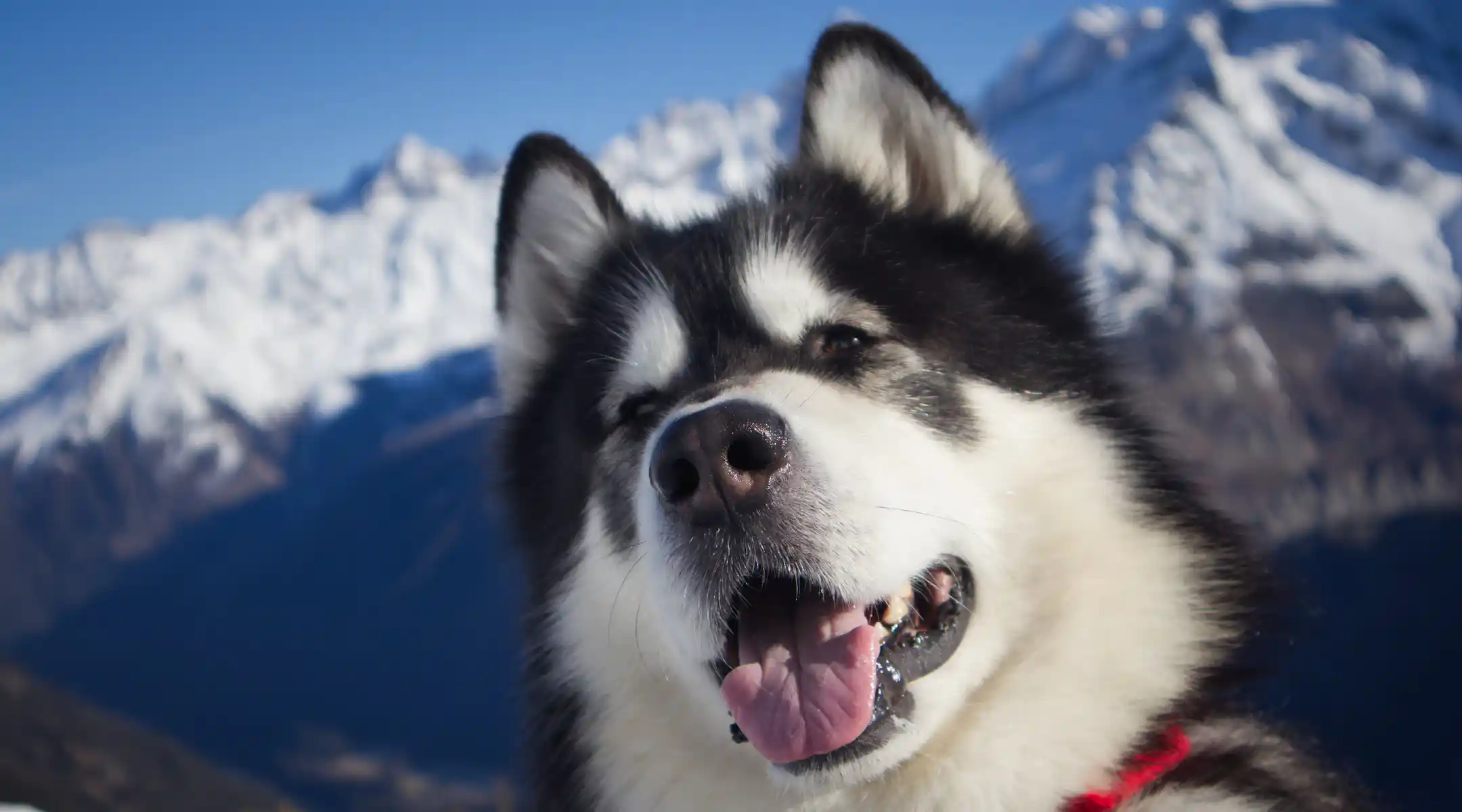
For many dog owners, the motorhome or campervan is the perfect way to travel. No weight restrictions, no hotel pet policies, no fixed schedules. You set the pace, your dog goes where you go, and your destination can change on a whim.
That said, life on the road with a dog does come with its own specifics: where you can stop, how pet rules work at campsites, what to do about the heat, and how to organize your space so the trip is comfortable for everyone.
The Real Advantages of Travelling by Motorhome with a Dog
Beyond the romance of it all, there are concrete reasons why so many dog owners make the switch to motorhome travel:
No admission policies. No hunting for a pet-friendly hotel, no per-dog surcharges, no advance phone calls to confirm. Your accommodation comes with you.
Your dog sleeps wherever they like. In their own bed, yours, or on the van sofa. No third-party rules.
You decide when to stop. On a main road or a dirt track, you can pull over whenever your dog needs to stretch — no waiting for scheduled bus or train stops.
More destinations within reach. Rural areas, remote beaches, nature parks — places where pet-friendly accommodation simply doesn't exist are perfectly accessible in a motorhome.
Campsite Rules — What to Expect
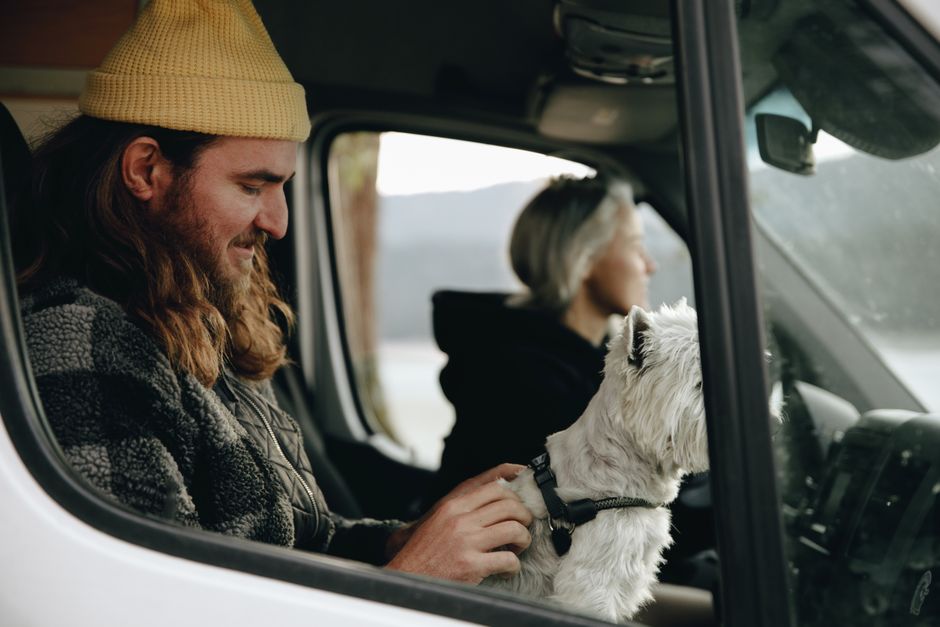
The majority of campsites in Spain accept dogs, but conditions vary from one place to the next.
The most common rules:
- Dogs allowed on most pitch categories
- Not permitted in pool areas or indoor dining spaces
- Documentation must be up to date (microchip, rabies vaccination, vet record booklet)
- Dogs must be kept on a lead throughout the site
- Limit of 1 or 2 pets per pitch (varies)
- Some campsites exclude PPP breeds (Potentially Dangerous Dogs under Spanish law)
How to find dog-friendly campsites:
- The website of the Spanish Camping Federation (FEDAC) has a search tool with a pet filter
- Platforms like Pitchup, Camping.info, and Eurocampings also have that filter
- The queviajemasperro.com directory includes verified campsites with their exact conditions
Motorhome Aires (without a campsite):
Motorhome aires — overnight parking areas for motor vehicles — tend to have fewer restrictions than campsites. Most accept pets with no special conditions. Check the Park4Night or Campercontact apps to find aires and read reviews from fellow travellers.
Wild camping:
In Spain there are areas where overnight stays in a motorhome in nature are permitted. Rules vary by autonomous community. In these spots, dogs can usually roam more freely as long as the surroundings allow it — though keeping them on a lead is still advisable in areas with wildlife.
The Heat — The Most Serious Risk
Heatstroke is the greatest risk of travelling with a dog in a motorhome. A closed campervan or caravan in summer can reach lethal temperatures in under 15 minutes.
Never leave your dog alone in a closed motorhome in summer. It may sound obvious, but it's the mistake that costs more dogs their lives every year than any other.
What you can do instead:
Roof vents with cross ventilation: if your motorhome has a roof hatch, combined with open side windows it creates airflow. It's not enough on its own during a Spanish summer — but it's better than nothing in spring or autumn.
Awning and shade area: when parked up, an awning provides shade outside and lowers the temperature inside. Your dog can rest in the shade outdoors with fresh water.
Independent climate control systems: some travellers install cooling systems that run off the battery or a solar panel while the engine is off. It's a significant investment, but it solves the underlying problem.
Thermometer with remote alert: there are thermometers with remote sensors and smartphone apps that notify you if the interior temperature exceeds a set threshold. Useful if you need to step away from the vehicle, even briefly.
The practical rule: if you'd be uncomfortable inside the van with it closed and no AC, your dog is at risk. The critical temperature threshold for a dog is much lower than it is for a person.
Organizing the Space So the Trip Actually Works
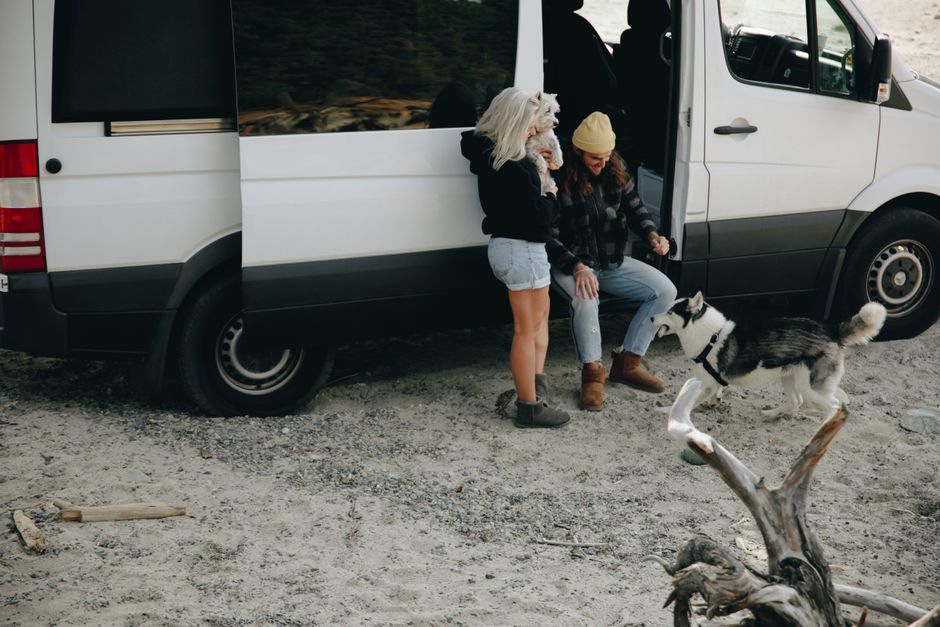
Space in a motorhome is limited. With a dog on board, being organized matters.
Your dog's area:
Decide from the start where they sleep, where their water bowl lives, and where they eat. In a small space, consistency helps your dog know where their territory is — and that means a calmer, more settled animal.
A dedicated bed in a fixed corner is better than letting them choose a new spot each day — fewer run-ins with the furniture, less stress for the dog.
Food and water:
Bring enough food for the whole trip plus a buffer. In rural areas or abroad, finding your dog's exact food can be tricky if the brand isn't widely available.
Water is critical — always carry more than you think you'll need. In summer, significantly more.
Mud, water, and general mess:
Your dog is going to come back in with wet, muddy paws. It's inevitable. An absorbent doormat at the motorhome entrance, a towel nearby, and a quick clean-up each time they come back from a walk will save you hours of deep cleaning down the line.
Medications and a basic vet kit:
Tick removal, insect stings, cut paws — things happen out in nature. Pack a basic kit: tick remover, antiseptic, gauze, a foldable Elizabethan collar, and the number of a vet near your destination.
On the Road — Rules and Safety in the Motorhome
Restraint rules apply in a motorhome just as they do in any other vehicle: your dog cannot move freely around the cabin while the vehicle is in motion.
In practice, this means:
- If your dog travels in the cab or a passenger area fitted with seatbelts, they need a harness or a crate
- If they're in the living area at the rear where there are no seatbelts, the rules are technically less clear — but in an accident, that's the most dangerous place to be
The most common solution: while driving, the dog travels in the cab with a harness clipped to the rear seatbelt. During stops, they have the run of the whole motorhome.
For dogs that get carsick or anxious on the move, a crate in the cab provides more stability. See the guide to anxiety and travel sickness in the car if that sounds like your dog.
Great Destinations in Spain for Motorhome Travel with a Dog
Galicia and Asturias: uncrowded beaches, many dog-friendly, mild summer temperatures. Ideal for thick-coated breeds that struggle in Mediterranean heat.
The Pyrenees: dog-friendly hiking routes, pet-welcoming campsites, and scenery that speaks for itself. Most high-mountain trails allow dogs on leads.
Extremadura: hot in summer, but perfectly manageable with sensible timing (early mornings and evenings). Monfragüe National Park allows dogs on many of its trails.
The Atlantic Coast: less regulated than the Mediterranean when it comes to dog-friendly beaches. In winter and the low season, many beaches in Galicia and Cantabria are completely open.
The Canary Islands: a favourite winter destination for motorhome travellers. Beach rules for dogs vary by island and municipality — check before you arrive. Getting your motorhome there means a ferry (Naviera Armas or Fred. Olsen) — see the guide to travelling by sea with a dog.
Documents You Cannot Leave Home Without
- Microchip: mandatory in Spain for dogs. Must be registered and current.
- Rabies vaccination: required and in date. Campsites and border crossings may ask for it.
- Up-to-date vet record booklet: with all vaccinations and treatments current.
- EU Pet Passport: essential if your trip crosses any EU border.
- Third-party liability insurance: required at some campsites and nature areas. Many home insurance policies include it — worth checking.
If you're travelling outside Spain, the guide to documentation for travelling with a dog covers requirements country by country.
In Summary — What to Have Straight Before You Set Off
Travelling by motorhome with a dog is possibly the most free way to travel for those of us who go everywhere with our pets. The preparation effort is absolutely worth it: more destinations, more flexibility, fewer restrictions.
The key points:
- Heat: never leave your dog alone in a closed motorhome in summer
- Campsites: confirm the pet policy before you arrive
- On the road: restraint while driving, just like in any car
- Documentation: up to date, no exceptions
Everything else is just good organization, enough water, and enjoying the open road.