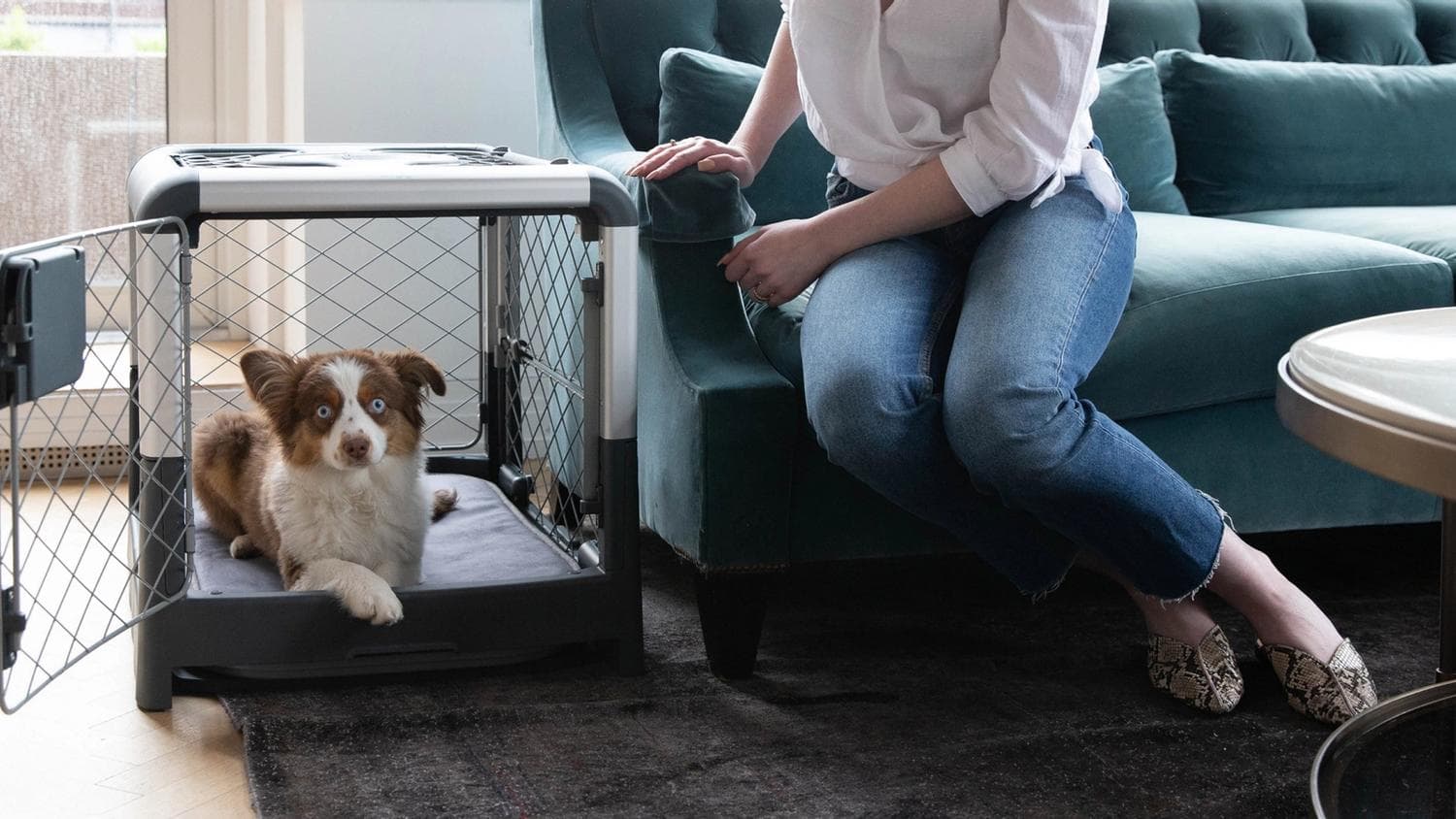
A carrier is the safest restraint system out there for travelling with your dog in the car. It's also the easiest one to get wrong. The wrong size, a model without certification, or leaving it loose in the boot can turn even the best carrier into a liability.
This guide helps you choose wisely: carrier type, the right measurements for your dog's size, what the ADAC crash test actually means, and which models have passed it.
Hard vs. soft carriers — the real difference
The first decision is the material. And the difference goes well beyond looks.
Hard carrier
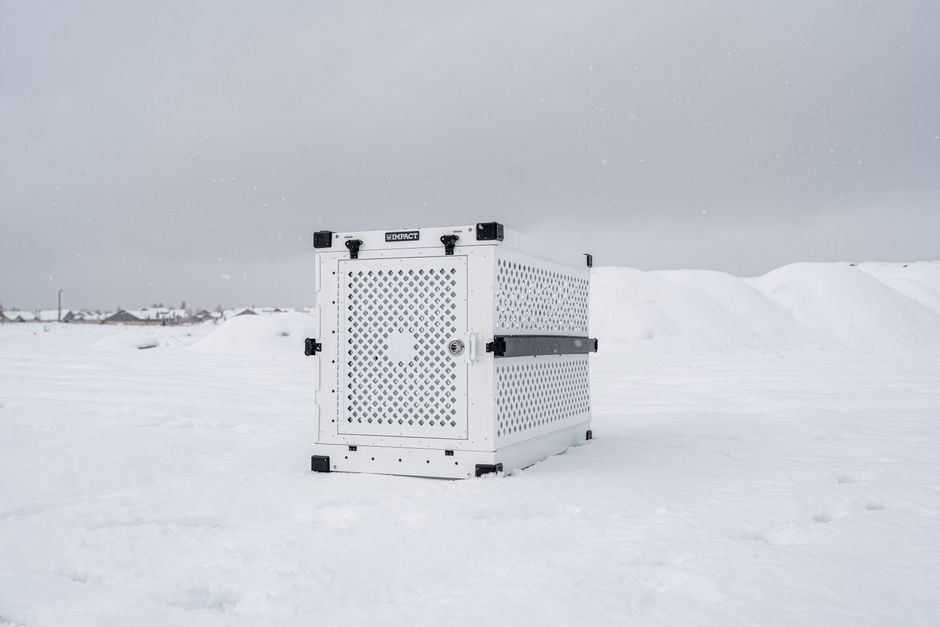
Made from rigid plastic or fibreglass. It offers structural protection in a collision: if the car takes a serious hit, the carrier holds its shape and shields your dog from the impact.
This is the recommended option for long journeys, medium and large dogs, and anyone who wants the highest level of safety. The downside is bulk — it takes up the space it takes up and doesn't fold away.
Some hard carriers hold an ADAC crash test certification (ADAC is the German motoring club, which runs the most rigorous safety tests in Europe). That means they've been through real impact tests with dummies and sensors. This isn't a marketing badge — it's a test with published results.
Soft carrier
Made from heavy-duty fabric, or a combination of fabric and a metal frame. It weighs less, takes up less room, folds flat when not in use, and is generally easier to clean.
It doesn't offer structural protection in a serious accident. If the car takes a strong lateral or frontal impact, a soft carrier won't protect your dog the way a hard one will.
That doesn't make it a bad choice — for small dogs, short trips, or situations where a hard carrier simply won't fit, a properly secured soft carrier meets legal requirements and offers reasonable protection. You just need to go in knowing what you're choosing.
Semi-rigid carrier
A middle ground: a fabric structure with rigid internal reinforcement in the walls and roof. More resistant than a pure soft carrier, more manageable than a hard one. Some semi-rigid models have also passed safety tests.
How to measure your dog for the right carrier
The most common mistake is buying a carrier without measuring. Here's what you need:
Length: from the tip of the nose to the base of the tail (don't include the tail). Add 10 cm.
Height: from the floor to the top of your dog's head when standing upright (standing normally, without stretching their neck). Add 10 cm.
Width: the widest part of the body, usually at shoulder level. Add 10 cm.
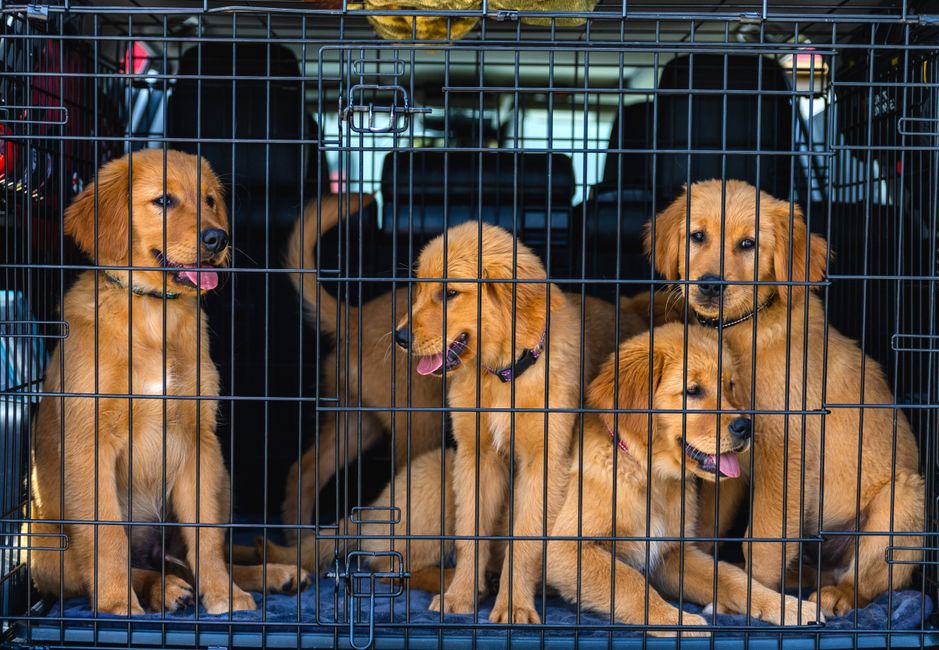
Those three measurements give you the minimum carrier size. Your dog should be able to stand without lowering their head, turn around completely, and lie down fully stretched out.
A carrier that's bigger than necessary isn't better — your dog will slide around and bump into the sides on every bend. The goal is the right fit: comfortable, but not excessive.
| Dog size | Approximate weight | Carrier size | |---|---|---| | Very small | Up to 5 kg | XS | | Small | 5–10 kg | S | | Medium | 10–25 kg | M or L | | Large | 25–40 kg | L or XL | | Giant | Over 40 kg | XL or XXL |
Sizes vary between manufacturers — always check the internal dimensions of the carrier, not the external ones, and compare them against your dog's measurements.
The ADAC crash test — what it means and why it matters
The ADAC (Allgemeiner Deutscher Automobil-Club) runs annual safety tests on pet carriers and travel harnesses. The method mirrors car crash testing: the carrier is subjected to an impact at a controlled speed with a dog dummy inside, fitted with sensors.
The results measure:
- Whether the carrier stays closed (i.e. your dog doesn't get thrown out)
- The forces the animal experiences inside
- Whether the structure survives the impact without deforming dangerously
The vast majority of carriers on the market have not passed this test — or have passed it with poor results. It isn't a mandatory test; it's voluntary. A carrier costing €80 doesn't mean it's been through it.
Models that have passed the ADAC crash test with a good score tend to be more expensive, more robust, and harder to find in general retail. But they're the only ones for which you can say, with actual data, that they protect your dog in a real accident.
The short version: for small dogs and occasional trips, a decent-quality soft carrier does the job well. For medium or large dogs, frequent journeys, or long trips, it's worth hunting down a model with ADAC certification.
How to secure the carrier in the car — the step everyone skips
An unsecured carrier is just as dangerous as a loose dog. In an emergency stop at 100 km/h, a 5 kg carrier becomes a projectile with enough force to cause serious injury to anyone in the car.
On the back seat
Most hard carriers have anchor points or handles through which a seatbelt can pass. Thread the seatbelt through those points and tighten it so the carrier sits firmly in place.
If the carrier doesn't have integrated anchor points, dedicated securing straps are available — they clip onto the seatbelt buckle. These are a perfectly valid solution and are often sold separately or included as an accessory.
In the boot
Some cars have anchor hooks in the boot floor (boot ISOFIX points or cargo hooks). Use them if you have them — it's the safest option.
If your car doesn't have hooks, a cargo net tensioned around the carrier reduces movement in a hard stop. It's not as secure as a direct anchor, but it's far better than leaving it free.
Common mistakes when using a carrier
Buying without measuring. You'll usually end up with a carrier that's too big (your dog slides around and gets bumped) or too small (the journey is miserable for everyone).
Leaving it loose in the boot. The most common mistake — and the most dangerous. A free carrier can turn into a projectile.
Blocking the ventilation. Covering the vents with a thick blanket, or positioning the carrier against a surface that cuts off airflow, creates a risk of heatstroke. Ventilation is non-negotiable.
Only bringing it out for the vet. If the carrier only appears during stressful situations, your dog will learn to dread it. Leave it out at home as their own space — let them use it whenever they want. That completely changes how they react to it in the car.
Stacking things on top in the boot. The carrier isn't a shelf. Objects placed on top restrict ventilation and add weight in any potential impact.

Extras that make a real difference
Interior mat or blanket: reduces vibration stress, especially for anxious dogs. Even better if it smells like you.
Partial opaque cover: some dogs travel better when they can't see the world rushing past them. A cover that blocks the sides but leaves the ventilation openings clear can really help.
Travel water bottle: on longer trips, a clip-on water bottle that attaches to the carrier's gate lets you hydrate your dog at rest stops without taking them out.
In summary — which carrier to look for based on your situation
| Situation | Recommended type | |---|---| | Small dog, short trips | Good-quality soft carrier | | Small dog, frequent or long journeys | Hard or semi-rigid carrier | | Medium dog | Hard carrier, ideally with ADAC crash test | | Large dog | XL hard carrier with ADAC crash test, or barrier + harness | | Limited boot space | Foldable soft carrier | | Maximum safety | Hard carrier with confirmed ADAC certification |
When you look at [Amazon link], search by actual size (measure your dog first), check the product's internal dimensions, and if a seller mentions a crash test, verify that it's specifically the ADAC test and that the result is published — not everything labelled "tested" has genuinely passed.
If you want to understand how to choose between a carrier, a harness, or a barrier for your specific situation, head over to the guide on how to travel with your dog in the car.