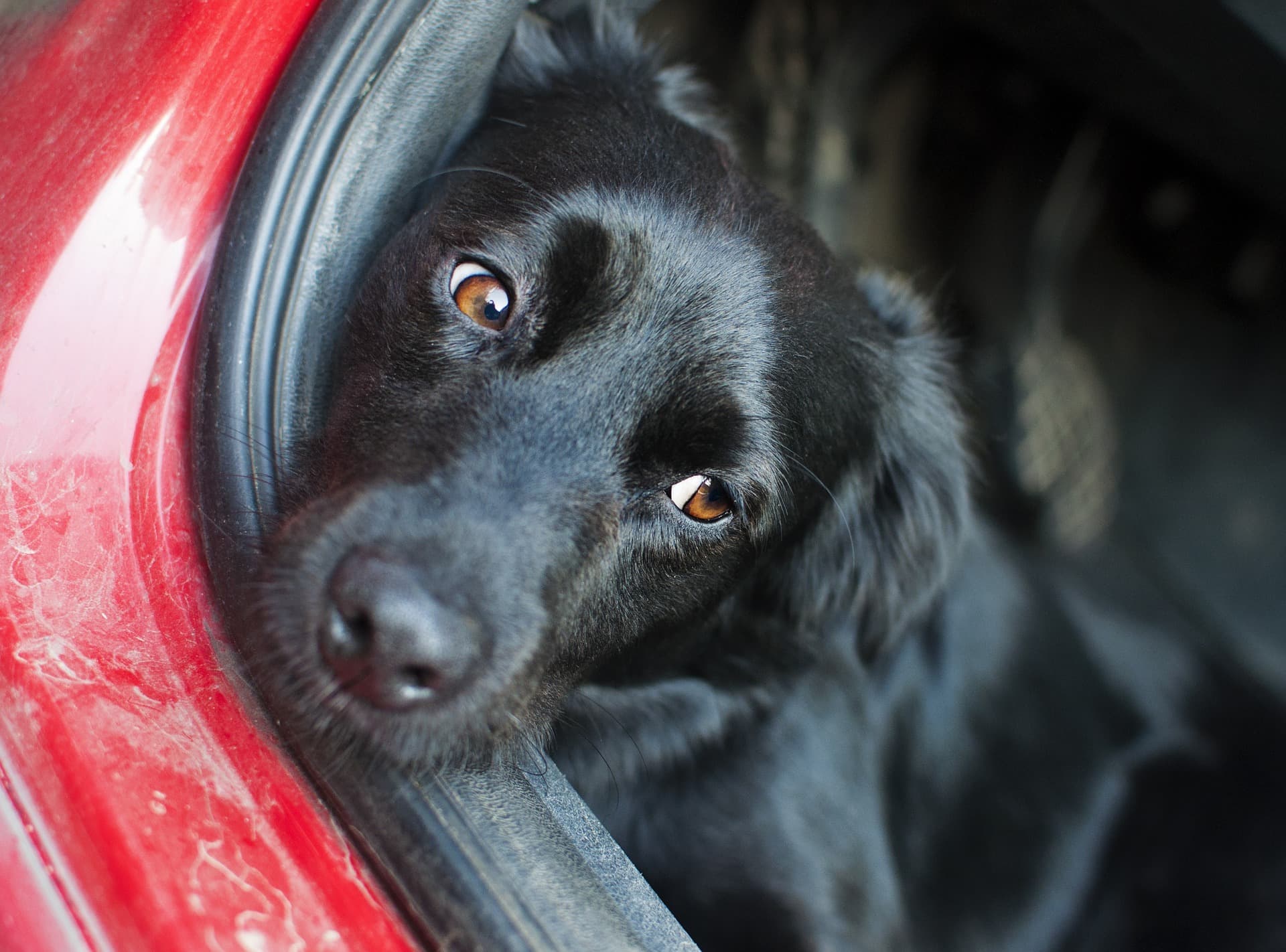
If you have a dog over 20 kilos, you already know how this goes. The pet travel world is built for teacup sizes. "Pet-friendly" hotels with an 8 kg limit, airlines that cut off cabin access at 10 kg, carriers that look designed for exotic rats. Meanwhile, there you are, staring at your 40 kg gentle giant thinking "I promise we tried."
This guide won't make things magically easier — but it can save you the nasty surprises. Which transport options are genuinely available for a large dog, how to find accommodation that won't fall through at the last minute, what changed with the July 2026 regulations (spoiler: there's good news on trains), and how to adapt the trip to the specific dog you have — because a Labrador and a Greyhound aren't the same even if they both weigh 30 kg.
Is Your Dog a PPP (Potentially Dangerous Breed)? This Changes a Few Things
Before we talk transport or accommodation, there's something worth clarifying that specifically affects certain large breeds: the classification as Perros Potencialmente Peligrosos (PPP — Potentially Dangerous Dogs).
In Spain, the following are classified as PPP by default: Pit Bull Terrier, Staffordshire Bull Terrier, American Staffordshire Terrier, Rottweiler, Dogo Argentino, Fila Brasileiro, Tosa Inu and Akita Inu — plus any crossbreed sharing morphological characteristics with these breeds. The regulation dates from 2002 (RD 287/2002) and is still in force, though some autonomous communities have their own rules on top of it.
If your dog is a PPP, you'll need the following to travel with them:
- PPP licence issued by your local council (roughly €30–50, valid for 5 years, renewable)
- Psychological fitness certificate for the owner
- Third-party liability insurance with a minimum coverage of €120,000 — dedicated policies typically cost between €60 and €150 per year
- Muzzle in all public spaces (non-negotiable, at all times)
- Lead no longer than 2 metres, non-extendable
In practice, travelling with a PPP isn't impossible, but it does add admin and some concrete restrictions: certain accommodation providers explicitly exclude them, some transport operators ban them outright, and the muzzle in public spaces is absolutely mandatory. If you're not sure whether your dog falls into this category, check with your local council or your vet.
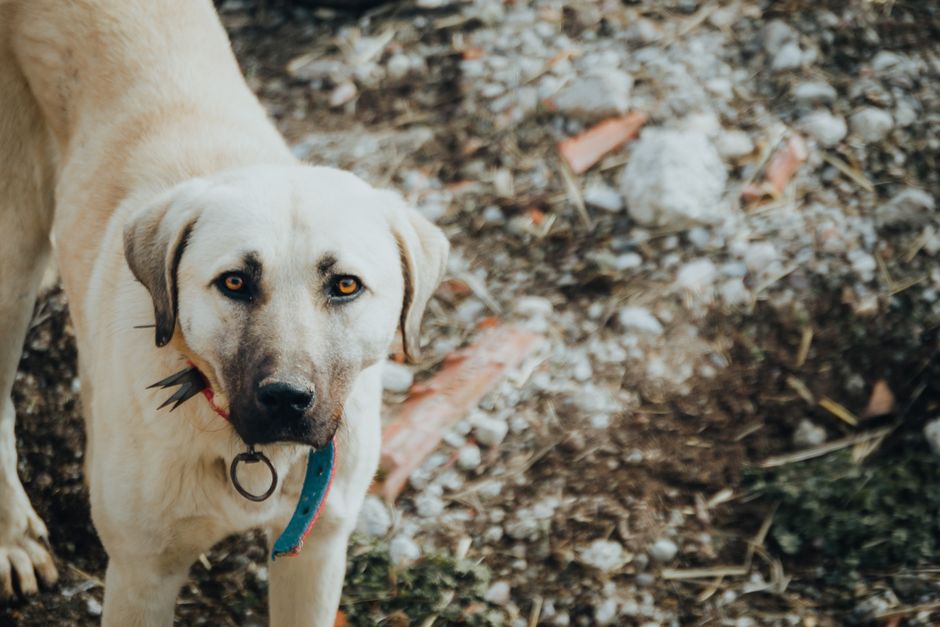
The Car: No Size Restrictions, No Asterisks
For large dogs, the car isn't just the most comfortable option — it's almost the only one without conditions attached. No weight limits, no airline-approved crates, no negotiating whether the breed is permitted. Your companion travels with you, full stop.
Safety: What the DGT (Spanish Traffic Authority) Requires
Spain's DGT requires that animals be restrained during the journey. This isn't optional, and it isn't a friendly suggestion — it's a regulation with a fine attached. For a large dog, the realistic options are:
Homologated harness connected to the seatbelt. Look for one that has passed real crash-test standards — TÜV certification is the benchmark that actually means something. A 40 kg dog loose in an emergency stop isn't an inconvenience; it's a projectile with very serious consequences.
Crate or rigid divider in the boot. For genuinely large dogs — over 35–40 kg or particularly bulky breeds — this is often the best solution. They have space, ventilation, and the driver isn't sharing their rear-view mirror with a 50 kg co-pilot.
What doesn't work: net-style dividers without rigid fixings are essentially useless in a crash. If you use one, treat it as a complement to proper restraint, not as the main safety system.
Stops
Budget for at least a 20-minute stop with a proper walk for every 1.5–2 hours of driving. Five minutes on the service station tarmac doesn't count — your dog needs to actually move, stretch fully, and burn off some energy. High-energy or working breeds need this more urgently than calmer ones.
In summer, stop more often. And never leave your dog alone in a parked car in the heat — not "just for a minute," not with the windows cracked. The inside of a car can hit 50°C in minutes.
Train: The Big Change from July 2026
Until July 2026, Renfe (Spain's national rail operator) was hostile territory for large dogs. The limit on most services was 10 kg in a carrier, which ruled out virtually any dog that wasn't a toy breed.
In July 2026, that changed. Renfe introduced dedicated pet carriages on long-distance trains, with the following conditions:
- Dogs up to 40 kg (the dog's weight, not including the carrier)
- A supplement of €40 per journey (the dog occupies the adjacent seat, which Renfe blocks automatically)
- Muzzle required from the moment you enter the station
- Lead no longer than 1.5 metres, non-extendable
- NOT permitted: puppies under 1 year old, PPP breeds, or females in heat
That last restriction matters: if your dog is a PPP (Rottweiler, Dogo Argentino, etc.), Renfe's long-distance services remain a closed door.
Renfe Cercanías (commuter) and Regional trains: accept dogs of any size with a muzzle and lead, at no extra cost. This is the most open option within the Renfe network for big dogs.
FGC (Catalonia): dogs of any size, muzzle and lead, free of charge. The Montserrat rack railway and the Vall de Núria train also accept them on similar terms — check our activities section for dedicated guides.
Euskotren (Basque Country): the most permissive operator of the lot. Accepts dogs of any size with no muzzle requirement and no extra cost. If you're heading to the Basque Country, that's very useful information.
Madrid Metro: large dogs (over 10 kg) can travel, but with restricted hours on weekdays — 9:30 to 13:30 and 20:00 until closing. Weekends, public holidays, and the months of July and August: all day. Muzzle required, lead maximum 50 cm.
TMB (Barcelona Metro and Bus): muzzle and lead maximum 50 cm. Restricted during peak hours (7:00–9:30 and 17:00–19:00). In practice, large dogs on TMB are uncommon — many staff aren't sure how to apply the rule and it can lead to friction.
More detail on all operators in our guide to [public transport with your dog].
Flying: Let's Be Honest
In the cabin, forget it if your dog is over 8–10 kg. Every commercial airline has that limit for cabin animals, with no exceptions to be negotiated at check-in.
Hold travel: technically possible with some airlines — Iberia and Air Europa do allow it with conditions; budget carriers like Ryanair or Vueling don't, full stop. But it needs to be said plainly: the hold is a tough experience for any dog. The noise, the darkness, the separation, the temperature changes. Yes, conditions are regulated. That doesn't make it stress-free.
Brachycephalic breeds — Bulldogs, Pugs, Boxers, Shih Tzus — face additional restrictions for hold travel due to their breathing difficulties. Some airlines ban them outright regardless of size. If you have one, call the airline before buying your ticket and ask specifically about your breed.
The general rule: if you can get there by car or train, do that. Flying with a large dog is the last resort.
More detail on conditions by airline in our guide to [flying with your dog].
Ferries and Boats
Ferries tend to be much friendlier to large dogs. Operators like Baleària, Trasmediterránea, and Brittany Ferries have deck areas for pets, and on longer crossings, kennels or pet-friendly cabins where your dog can be with you.
Conditions vary significantly by operator and route. Always check before booking whether they accept your dog's size, and if your dog is a PPP, whether there are any restrictions. Some international ferries also require additional documentation (a European Pet Passport with a current rabies vaccination).
More detail in our guide to [travelling by sea with your dog].
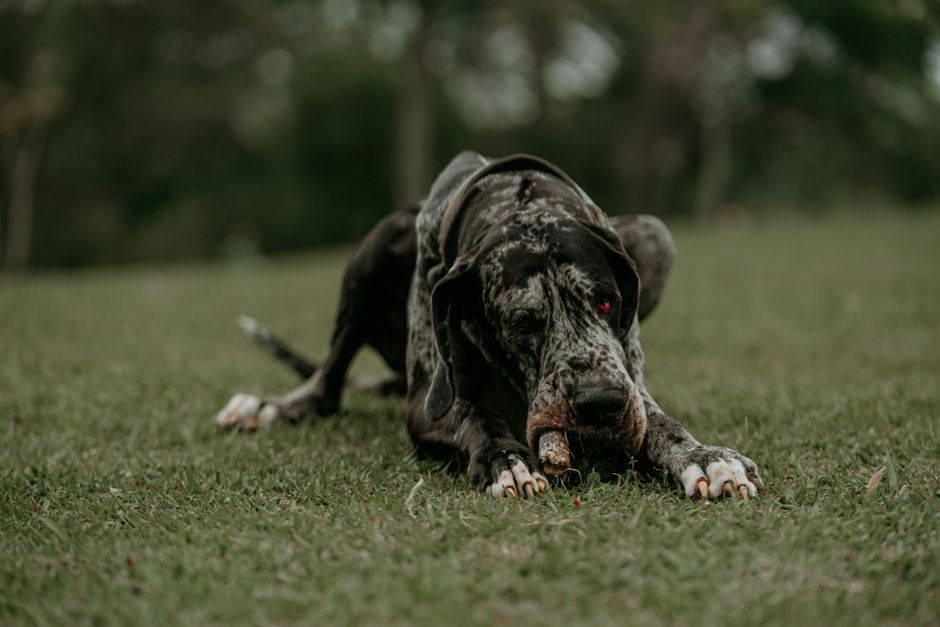
Accommodation: The "Pet-Friendly" That Often Isn't
This is the number one complaint from large dog owners. The place advertises "pets welcome," and when you enquire it turns out the limit is 10 kg, or 15 kg, or the owner decides on the spot.
The golden rule: before booking, ask directly for the maximum weight limit. With the exact number, no vagueness. It's not a strange question — it's the question every large dog owner has been asking for years.
At queviajemasperro.com we specify the maximum weight accepted in every accommodation listing, whether there's a pet supplement, whether they accept PPP breeds, and whether the dog can be left alone in the room. So you don't have to go through that process every single time.
If the accommodation offers a dog bed: check that it's actually a suitable size. A Great Dane on a grooming salon cushion isn't rest — it's involuntary yoga. Most large dog owners prefer to bring their own bed or blanket anyway, which has the added benefit of smelling like home and helping your dog settle in a new environment.
PPP breeds and accommodation: some establishments explicitly exclude these breeds. That's legal — owners can set their own terms. Filter before you waste time on bookings that will fall through.
Activities: What Works and What Doesn't
Large dogs are well-suited to most outdoor activities: hiking trails, open-access beaches, rivers, natural parks. Terrain, movement and space are where they thrive.
What doesn't always work:
Beaches in high season: many Spanish beaches ban dogs between June and September, or restrict them to specific zones. Always check the local rules for your chosen beach before you go. Our beach section has a filterable listing.
Restaurants: large dogs aren't always welcome on terraces, even if the law doesn't exclude them. It depends on the establishment and how the owner manages the space. With very large dogs, it's best to ask ahead or choose places with plenty of open outdoor space.
Urban public transport: in cities like Valencia, or on specific lines, large dogs simply don't fit the equation. Plan city travel with the car as a fallback, even if your destination is central.
The Trip Changes Depending on Your Dog
Not all large dogs are the same, and that really shows when you travel.
Working breeds — German Shepherd, Border Collie, Malinois, Siberian Husky — need real exercise to arrive at the destination in a balanced state. Without it, anxiety sets in before you've even unpacked. Plan routes with space to run properly, not just on-lead walks.
Giant breeds — Great Dane, St Bernard, Mastiff — handle heat poorly and tire faster. In summer, travel during the cooler hours. The boot needs cushioning — cold hard floors take a toll, especially for breeds prone to hip dysplasia.
Breeds with sensitive hips — Labradors, older German Shepherds — appreciate an orthopaedic bed at the destination and some comfort underfoot in the boot. If your dog has confirmed arthritis or dysplasia, speak to your vet before planning long journeys.
Large brachycephalic breeds — English or French Bulldogs on the bigger side — have breathing difficulties that worsen in heat and stress. Hold travel on a plane is not a safe option for them. In summer, be very alert to the risk of heatstroke.
Heat: A Real Risk
Large dogs accumulate heat faster than small ones and dissipate it less efficiently. In summer, this isn't a footnote — it's a potential emergency.
Signs of heatstroke: very intense panting, excessive drooling, stumbling, red or purple gums, disorientation, loss of consciousness. If you see any of these signs, get to an emergency vet immediately. On the way: move the dog to a cool area, wet the paws and belly with cool (not ice-cold) water, ventilate the space.
Never leave your dog alone in a parked car, even "just for a minute." A car parked in the shade with the windows cracked can reach 40°C in fifteen minutes when the outside temperature is above 30°C.
At your destination: walks before 9am and after 7pm in July and August. The tarmac can burn their paw pads — if your hand can't hold on the ground for 5 seconds, your dog's paws won't manage it either.
What to Pack: The Non-Negotiables
- Homologated harness or properly secured travel crate
- Extra water (large dogs drink a lot — double in summer)
- A full-sized collapsible bowl
- Their own bed or blanket with the smell of home
- Their usual food (don't change their diet when travelling)
- Lead and a spare lead
- Muzzle (required in many spaces, mandatory at all times for PPP breeds)
- Vet records and documentation
- Up-to-date parasite treatment
- Regular medication if applicable
- Basic first aid kit: gauze, antiseptic, tick remover
- The number of a vet at your destination, written down
The Most Common Questions
Can my large dog travel by train now? With Renfe's new July 2026 rules, yes — up to 40 kg in the new dedicated pet carriages on long-distance services, with a €40 supplement. But there are restrictions: PPP breeds, puppies under 1 year old, and females in heat are not accepted. On Cercanías commuter trains and most regional services, there's no size limit.
Which airlines allow large dogs in the hold? Iberia and Air Europa do, with conditions. Ryanair, Vueling and most budget carriers do not. Always check directly with the airline before buying your ticket — and do it before you buy, not after.
How do I know if accommodation will actually accept my dog? Ask for the weight limit before booking. Many places that say "pet-friendly" have a cap of 10–15 kg. At queviajemasperro.com we specify the maximum weight accepted in every listing.
Can my PPP dog travel by train? On Cercanías, yes — with muzzle and lead. On Renfe's new long-distance pet carriages, no — PPP breeds are explicitly excluded. It depends on the operator: Euskotren, for example, is considerably more flexible.
How do I know if my dog is classified as a PPP? The breeds listed under RD 287/2002 are: Pit Bull Terrier, Staffordshire Bull Terrier, American Staffordshire Terrier, Rottweiler, Dogo Argentino, Fila Brasileiro, Tosa Inu and Akita Inu, plus crossbreeds with similar morphological traits. If you're not sure, check with your local council or your vet.
How long can my large dog stay in the car without a break? A maximum of 1.5–2 hours before a stop with a proper walk. More frequently in summer. High-energy breeds need it sooner than calmer ones.