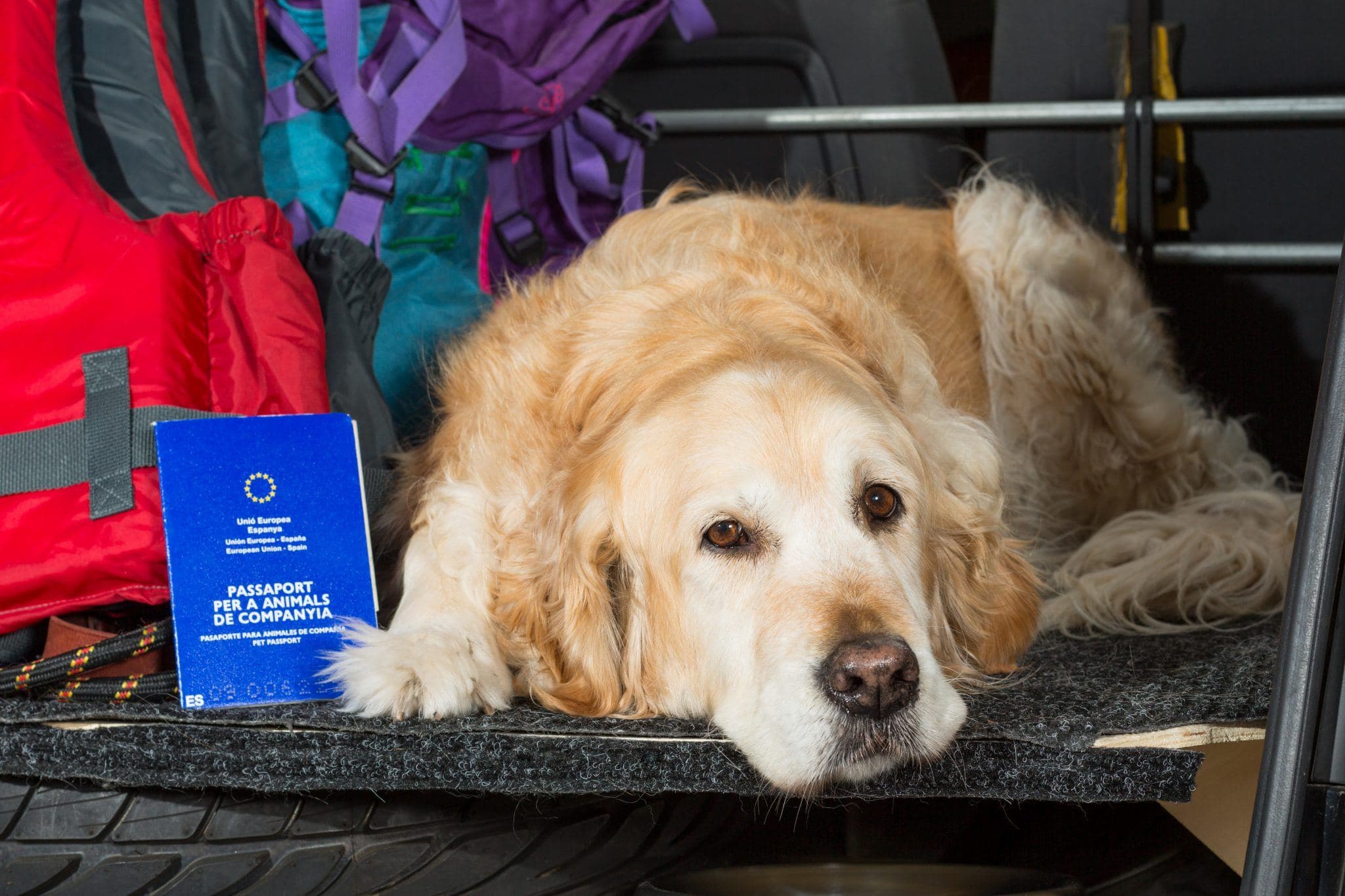
Dog Travel Documentation: Everything You Need to Know Before You Go
Before you search for pet-friendly accommodation, before you check whether the beach allows dogs, before you even pick a destination — there's one question worth sorting out first: does your companion's paperwork check out?
The good news is that it's not as complicated as it sounds. The bad news is that specific mistakes can ruin a trip: a rabies vaccine that expired the day you hit the border, a microchip that isn't registered to your current name, or not knowing that certain countries require paperwork that takes months to arrange. This article is here so none of those surprises catch you off guard.
We'll walk through it in layers: what you need within Spain, what you need for Europe, what changes outside the EU, and the special cases people ask about most — Andorra, Morocco, the UK, and farther-flung destinations.
The basics every travelling dog needs to have in order
Before we get into borders and passports, there are three things that absolutely must be sorted for any trip — even a weekend at a campsite two hours from home.
The microchip: your pet's ID
Microchipping is mandatory in Spain for all dogs. Without one there's no European passport, no identification at the border, and if your pet goes missing at any point during the trip, the chances of getting them back drop dramatically.
It's a radio-frequency chip the size of a grain of rice, implanted under the skin at the back of the neck by a vet in a matter of seconds — no anaesthetic needed. The number follows a 15-digit ISO format. Once implanted, it gets registered in the local municipal census and the relevant regional registry (AIAC in Catalonia, ANICOM, RGAC and others depending on the region), which in turn connects to international databases like REIAC, EUROPETNET and PETMAXX.
The cost is roughly €20–50 depending on the clinic. Quick, affordable, and it lasts your dog's entire life.
Two things people often forget: first, the microchip must be implanted before the rabies vaccine, or on the same day — if it's done after, the European passport isn't valid. Second, if you've changed your phone number, address or ownership and haven't updated the registry, the chip exists but is practically useless. Keep your details current.
The vaccination record: the history everyone asks for
The vaccination booklet — or health record — is where your dog's vaccines, deworming treatments and relevant medical history are logged. There's no single official format in Spain, but it's the document you'll be asked for at campsites, rural accommodation and most forms of transport.
The most important thing it must show: the rabies vaccine, with date, manufacturer and expiry. Within Spain it's not compulsory in every region, but several do require it — and if you're crossing any border, it's non-negotiable. If you travel regularly with your dog, just get it done and stop worrying about it.
Internal and external deworming treatments should also be recorded, especially if your destination requires proof of antiparasitic treatment.
The rabies vaccine: the detail most people overlook
Something many people aren't clear on: after a dog receives its first-ever rabies vaccine, you have to wait 21 days before it's valid for crossing borders. Not 20, not "roughly three weeks." Exactly 21 days from the date of vaccination.
If you're planning an international trip with a dog that hasn't had the rabies vaccine yet, factor this in with plenty of time to spare. If they've already had it and this is a booster (not the first dose), protection is immediate.

Travelling within Spain: what you may be asked for
There are no border checks between Spanish regions, but that doesn't mean you can head off without any paperwork. Having the vaccination record on you is enough in most everyday situations.
There are three contexts where documentation matters more:
Intercity transport. Long-distance trains, ferries and some coaches may ask you to prove your dog's vaccinations are up to date. Each operator sets its own rules — conditions vary and aren't always consistent. Check them before you buy your ticket.
Beaches, parks and campsites. Local wardens or rangers may ask you to prove the microchip and vaccination are current. It doesn't happen often, but it does happen. Bringing the vaccination record costs nothing and saves you a lot of explaining.
Regions where the rabies vaccine is compulsory. If you travel to a region that requires rabies vaccination and your dog doesn't have it, you could be fined. Before a long trip, check what applies at your destination.
The European Pet Passport: what it is and what it's for
The European pet passport is not the same as the vaccination booklet. They're different documents with different purposes: the booklet is your dog's clinical history; the passport is the official document recognised across the entire EU that you need to cross borders.
It comes in a standardised format in all member states — usually a small blue booklet — and is valid for life, as long as the rabies vaccination is kept current. If the vaccine expires, the passport becomes invalid until you get the booster and the vet updates the record.
How to get one and what it costs
Only an authorised vet can issue it. Not all vets are certified to do this, so call your usual clinic to check, or ask where to find a registered one nearby. To apply, your pet needs the microchip implanted and a valid rabies vaccine.
The rough cost ranges from €40 to €120, depending on whether the vaccine needs to be given on the same day and on local consultation fees. It's usually ready within 24 hours. It's not a budget-breaker, and it pays for itself the first time you cross a border.
What's inside the passport
You'll find your pet's identification details, the microchip number, the owner's details, the rabies vaccination record including date, manufacturer and expiry, and space for the antiparasitic treatments some countries require. Everything in one document.
Treat it like your own passport: keep it somewhere safe, take it with you whenever you travel, and don't leave it in the boot while you're at the beach.

The most popular destinations from Spain: exactly what you need
France and Portugal: the straightforward ones
Both are part of the Schengen Area and the EU, so the requirements are standard: microchip, valid rabies vaccine and European passport. With those three, you're good. Land border checks are infrequent but they do happen — carry the documents even if you don't expect to be stopped.
One thing to bear in mind for France: if you're travelling with a breed classified as potentially dangerous (see below), French law has its own restrictions that may differ from Spanish rules. Look into this beforehand.
Italy and Greece
Same requirements as France and Portugal: microchip, valid rabies vaccine, European passport. If you're entering Greece by ferry, some operators ask for the passport at embarkation — check the conditions with your specific company.
Andorra: the special case nobody explains properly
Andorra is a principality that doesn't belong to the European Union, even though it sits within the Schengen Area. The practical implication: the European pet passport isn't technically required to enter, but taking it is strongly recommended. Checks at the Spain–Andorra border are common and agents can ask for documentation.
In practice, a microchip, up-to-date health record and valid rabies vaccine usually gets you through without a problem. But if you have the European passport with you, you're covered for any eventuality. Antiparasitic treatment may also be checked. Returning to Spain from Andorra works the same way: checks are possible, so keep everything in order.
Morocco: start sorting this out well in advance
Morocco is outside the EU, so the European passport alone won't do the job. You'll need:
- Microchip and valid rabies vaccine (minimum 21 days before travel)
- An official health certificate issued by a vet and endorsed by the relevant veterinary authorities (MAPA in Spain). This certificate must be issued within the 10 days before travel
- In some cases, documented antiparasitic treatment
One important detail: Morocco is classified as a rabies-risk country by the WHO. When returning to Spain, health authorities may ask for proof that your pet was properly treated during the stay. Ask your vet for the full protocol before you plan the trip.
UK: Brexit affects dogs too
The UK stopped accepting the European pet passport after Brexit. You now need an Animal Health Certificate (AHC) — an official health certificate issued by an official Spanish vet within the 10 days before travel. This is in addition to the microchip and valid rabies vaccine.
The process is more expensive, more bureaucratic and requires more planning than a standard EU trip. Find an authorised official vet in your area well ahead of time — not all vets are certified for this — and don't leave it to the last minute.
Antiparasitic treatment: when it's compulsory
Tapeworm treatment (Echinococcus multilocularis) isn't required everywhere, but in the countries that do require it, it's mandatory and must be recorded in the passport.
Countries that typically require it: Finland, Ireland, Malta and the United Kingdom. The treatment involves giving your dog a specific tablet between 48 hours and 5 days before entering the country — not earlier, not later; the window is exact. The date and time of treatment must be recorded in the passport by the vet.
The cost ranges from around €5 to €20 depending on the dog's weight. That's the easy part — what you can't afford is forgetting it or getting the timing wrong.
Note: tapeworm treatment is required for dogs. For cats and ferrets, it's generally not required.

Outside the EU: start planning months in advance
Japan, Australia, New Zealand, the United States, Canada... if the adventure takes you further afield, the requirements change significantly and preparation time becomes crucial. Some processes take months — and that's no exaggeration.
The most common requirements for non-EU destinations:
Rabies antibody test (RNATT). This measures rabies antibodies in the blood and is mandatory for countries like Japan, Australia and New Zealand. It must be carried out at a laboratory approved by the destination country, and depending on where you're going, there can be a compulsory waiting period of up to three months between the test and entry. It can only be done after the rabies vaccine has been in place for a minimum amount of time.
Official health certificate. Issued by a vet and stamped by the national veterinary authorities (MAPA in Spain). In some cases it also requires endorsement from the destination country's official veterinary body, such as the USDA for the United States.
Quarantine. Australia and New Zealand require quarantine on arrival for most animals, regardless of documentation. There's no way around it. Better to know before you buy the flights.
Import permits. Some countries require these, at an additional cost.
The golden rule for non-EU destinations: start preparing at least 6 months in advance. Deadlines stack up, and if you fall short at any stage, you may have to delay the trip or leave your pet behind.
Official source for up-to-date requirements by country: TRACES (the European Commission's platform for animal trade and transport) and the website of the embassy of your destination country.
Potentially dangerous dogs: what changes for you
Until 2023, Spanish law had a list of breeds classified as "potentially dangerous" (PPP in Spanish) with additional requirements. The Animal Welfare Act removed that national classification — but some regions still maintain their own legislation. The legal situation is in transition and not fully resolved.
If your dog is one of the following breeds — Pit Bull Terrier, Staffordshire Bull Terrier, American Staffordshire Terrier, Rottweiler, Dogo Argentino, Fila Brasileiro, Tosa Inu or Akita Inu — check exactly what your region says. And if you're travelling to another region, check what applies there too.
Where PPP rules are in force, the additional requirements are:
Ownership licence. This authorises the owner to keep a potentially dangerous animal. It costs around €30–50, is valid for 5 years and must be renewed periodically. Requirements include being of legal age, having no serious sanctions, and passing visual, auditory and psychological assessments.
Third-party liability insurance. Minimum coverage of €120,000 for damages to third parties. Must be carried alongside the licence.
Compulsory equipment. A muzzle suited to the dog's facial structure, a non-extendable lead of no more than 2 metres, and only one dog per person in public spaces.
And for international travel: several European countries have their own restrictions on PPP breeds that don't necessarily align with Spanish rules. Before crossing a border with one of these dogs, verify what applies in the destination country.
Travelling with puppies: minimum age matters
Something many people don't know: puppies must be at least 12 weeks old to travel legally. That minimum ensures natural weaning has taken place and that the puppy is in a fit state to handle the stress of a journey.
Beyond that, for the European passport to be valid, the rabies vaccine must already have been given and the microchip implanted beforehand — which in practice means very young puppies can't cross borders even if they technically meet the age requirement. The first rabies dose is usually given from 12–16 weeks of age, and then you still need to wait the required 21 days for it to be valid.
If you're planning an international trip with a puppy, discuss it with your vet from the start so they can help you work out a vaccination schedule around your travel dates.
What to do if you lose the documents during the trip
It happens more often than you'd think: a bag goes missing, the car is broken into, or the passport simply gets left at the accommodation. Before you leave:
- Photograph all documents on your phone and back them up to the cloud
- Note down your dog's microchip number separately — you'll need it for any emergency procedures
- Save your regular vet's number — they may be able to issue duplicates or emergency certificates in some situations
If you lose the European passport during a trip, you'll need to get a new one issued when you return to Spain. The microchip remains valid for identifying the animal under any circumstances.
Which animals can get a European passport
The EU's European pet passport is currently available only for dogs, cats and ferrets. These are the species covered by the companion animal travel regulations.
Other pets — rabbits, birds, reptiles, rodents — can travel in some contexts, but the process is different, more complex, and in many cases treats the animal as goods for customs purposes. If you're travelling with an unconventional pet, research the specific requirements in advance and contact the destination country's embassy directly.
Checklist by destination
| Document | Spain | EU (France, Portugal, Italy…) | Andorra | Morocco | UK | Non-EU (Japan, Australia…) | |---|---|---|---|---|---|---| | Microchip | Compulsory | Compulsory | Strongly recommended | Compulsory | Compulsory | Compulsory | | Vaccination record | Recommended | Recommended | Recommended | Recommended | — | — | | Rabies vaccine | Depends on region | Compulsory | Strongly recommended | Compulsory (21 days) | Compulsory | Compulsory | | European passport | Not required | Compulsory | Recommended | Not valid | Not valid | Not valid | | Official health certificate | No | Some countries only | No | Compulsory (10 days) | Compulsory (10 days) | Compulsory | | Antiparasitic treatment (tapeworm) | No | Finland, Ireland, Malta | No | No | Compulsory | Depends on country | | Rabies antibody test | No | No | No | No | No | Japan, Australia, NZ… | | PPP licence (if applicable) | Depends on region | Check local rules | Check | Check | Check | Check | | Quarantine | No | No | No | No | No | Australia, NZ (compulsory) |
One thing that never changes regardless of destination: always bring the originals. Not photocopies, not a photo on your phone as your only backup. Some countries and some border crossings require original stamped documents and won't accept anything else.
Frequently asked questions
Does my dog's European passport expire?
The passport itself has no expiry date. What expires is the rabies vaccine recorded inside it. When the vaccine runs out, the passport stops being valid for travel until you get the booster and the vet updates the record. Pop it in the calendar just like you would a car service.
Can I take my dog on a plane with just the European passport?
The passport covers border crossings, but air travel has its own rules set by each airline. Some allow pets in the cabin up to a certain weight, others only in the hold, and the documentation and carrier requirements vary considerably. Check with the airline before you buy your ticket — not after.
How far in advance do I need to get the passport?
For travel within the EU, it's usually ready within 24–48 hours. For travel outside the EU requiring an official health certificate, the certificate must be issued within 10 days before travel — which means you can't sort it too far ahead. For destinations requiring a rabies antibody test, start planning at least 6 months in advance.
Can I cross into Portugal or France by car without being stopped?
In practice, checks at land borders within the Schengen Area are infrequent — but they do happen. Have your microchip, valid rabies vaccine and European passport in order and there's no issue even if you are stopped. Don't skip it just because "they probably won't check."
What happens if my dog bites someone during the trip?
Local authorities may demand immediate access to the health documentation to verify the rabies vaccine. Having it on you at all times isn't optional in these situations. It's one of those things you hope you'll never need — but you'll be very glad you have it if it ever comes up.
Can I travel to Andorra without a European passport?
Technically the European passport isn't compulsory for entering Andorra, but border checks are common and the microchip plus rabies vaccine are the bare minimum you should have. Taking the European passport covers you for any eventuality and costs no extra effort.
My dog is pregnant or has nursing puppies. Can they travel?
For the mother, the requirements are the same as for any adult dog. For the puppies, the minimum age is 12 weeks. A nursing puppy younger than that cannot travel legally, regardless of documentation. If you're travelling with a recent litter, ask your vet for the exact timeline.
Is this information final?
Regulations around travelling with pets change fairly regularly — countries updating their requirements, regions revising their PPP rules, or shifts in post-Brexit protocols. This article covers the general requirements based on the most up-to-date information available, but before any international trip, always double-check with your vet and the official sources for your destination country. A documentation error at the border can ruin the whole trip.
Got your paperwork sorted and now looking for where to go? Find pet-friendly accommodation across Spain at Where to Stay, or browse the transport guides to find out how to travel with your dog by train, plane or ferry.