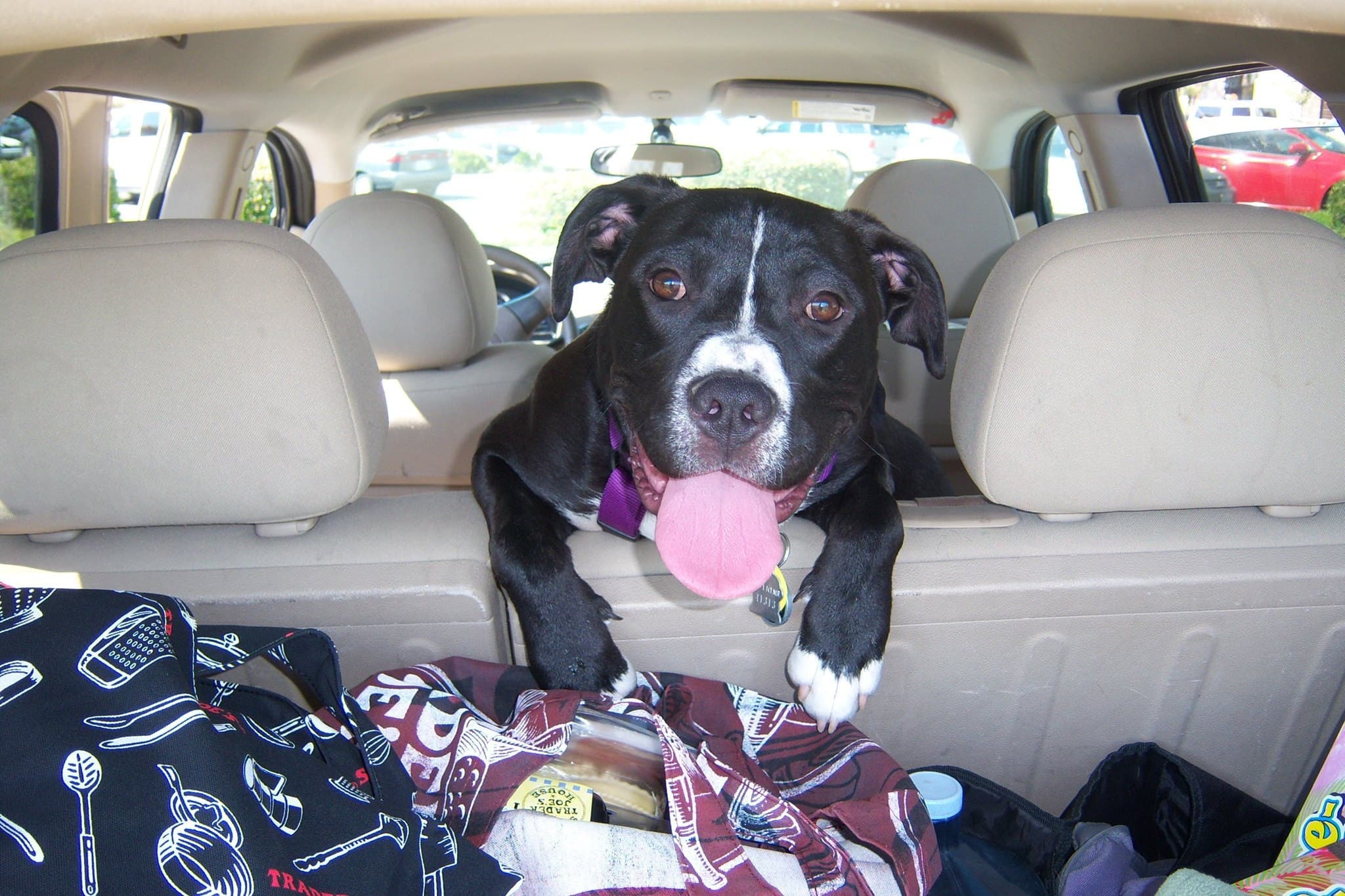
The car is the favourite way to travel for dog owners, and it makes perfect sense. No size restrictions, no mandatory muzzle on the motorway, no weight limits that would exclude your 35-kilo Labrador. You control the stops, the pace and the temperature, and your companion can travel in whatever space suits them best. That freedom comes at a price, though: you need to do it properly, because when things go wrong in a car, they tend to go very wrong indeed.
This guide covers the actual DGT regulations, the restraint options that genuinely work, how to prepare your dog for the journey, what to pack, how to manage heat and cold, and what to do if something goes sideways along the way.
The DGT and Dogs in the Car: What the Law Actually Says
Let's start with what isn't up for debate. Article 18 of the General Traffic Regulations states that the driver must not carry animals that interfere with driving. The DGT's practical interpretation is clear: the animal must be restrained or contained in such a way that it cannot move freely around the vehicle.
Failing to comply is a serious offence: a €200 fine and the loss of 3 points from your licence. This isn't a safety recommendation or a friendly heads-up — it's a regulation with real consequences.
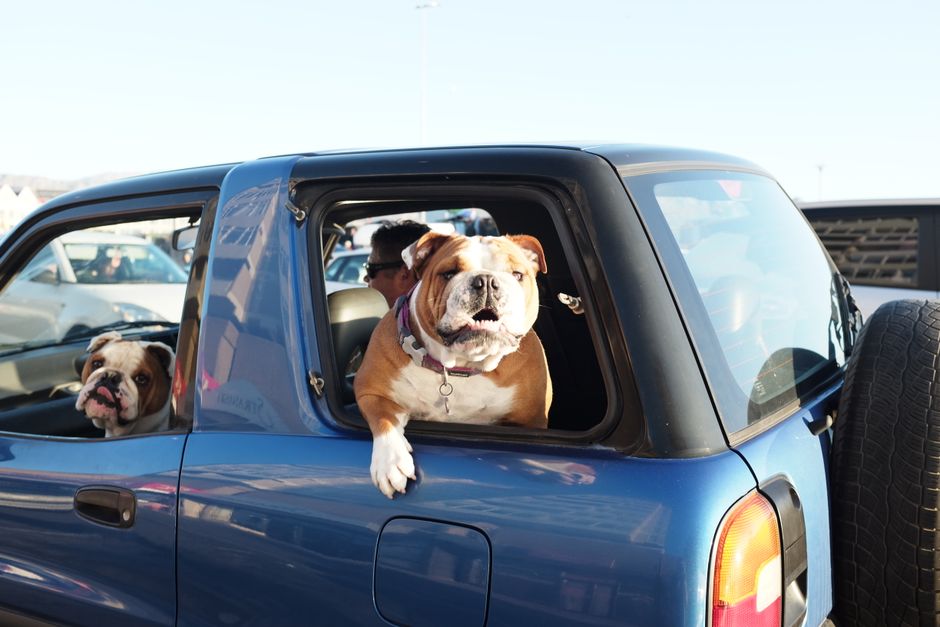
What the DGT does not specify is the exact method. The law lets you choose between several valid options: a carrier, an approved harness, or a dividing grille. What isn't valid is the option you see most often on the road: the dog riding shotgun unrestrained, head out the window, doing exactly as it pleases.
We're not going to sugarcoat this, because it matters: in an emergency stop at 120 km/h, an unrestrained 30 kg dog generates an impact equivalent to around 900 kg. That's not a small projectile.
Restraint Options: Choosing the Right One for Your Dog and Your Car
Carrier: The Safest Option If It's Properly Secured
A carrier is the option that best distributes the impact in an accident, because the dog is structurally contained. The condition is that it must be fixed in place — a carrier that goes flying in a sudden stop is just as dangerous as a loose dog.
Hard-sided carrier (rigid plastic): greater structural protection, better for medium and large dogs. It can go in the boot or on the back seat secured with the seatbelt. Carriers with a crash test certification are the ones that have genuinely been tested — look for ADAC tests or similar if you want the highest level of safety.
Soft-sided carrier (fabric or combination): lighter, easier to handle, takes up far less space. Perfect for small dogs and shorter journeys. It doesn't offer structural protection in a serious accident, but it's far better than nothing and fully meets the regulations if it's properly secured.
Sizing: the carrier needs to be just the right size. Your dog should be able to stand up, turn around, and lie down. Too large and they'll be thrown around on every bend; too small and the journey is a misery.
Approved Harness: The Most Comfortable Option for Many Dogs
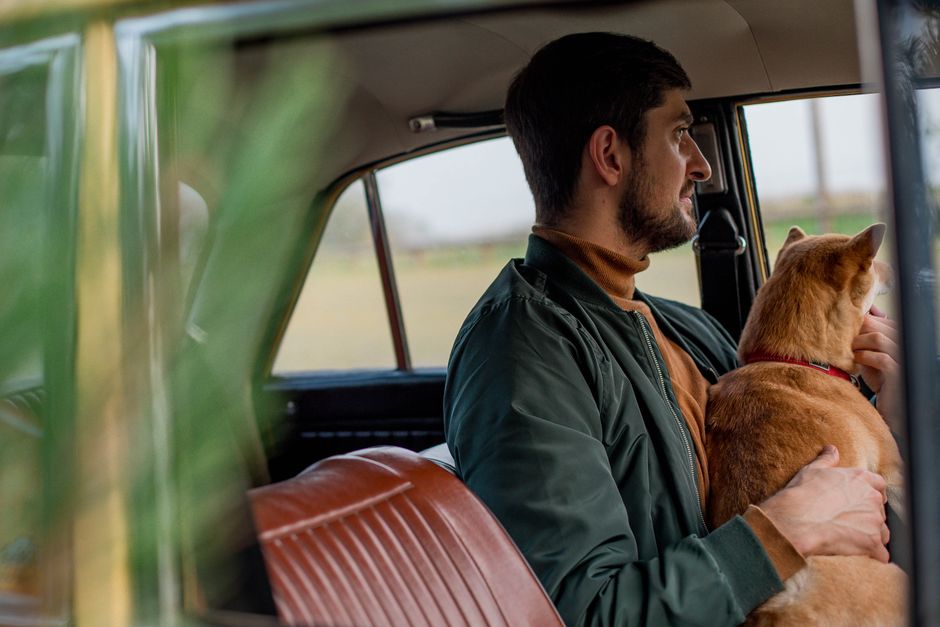
A travel harness clips into the rear seatbelt and keeps your dog restrained without confining them. For many dogs, this is the most tolerable option — especially those that protest at full volume inside a carrier.
The key word is "approved". A walking harness won't do — it's not designed to withstand the forces of emergency braking or an impact. Look for models with TÜV certification or that have passed the Stiftung Warentest. The difference between a generic €15 harness and a properly tested one could be measured in serious injuries.
The front passenger seat: technically permitted if the harness restrains the dog properly. In practice, not recommended. The front airbag isn't designed for a dog's body shape and can cause serious injuries to their face and chest in an accident. The back seat is always the safest position.
Dividing Grille: The Boot Solution
A metal grille between the passenger compartment and the boot stops your dog from deciding, mid-motorway, that they'd rather be up front. It meets the regulations, works well for larger dogs who have enough space to stretch out in the boot, and many estate cars and SUVs come with them as standard or as a manufacturer accessory.
Its limitation: in a sharp stop, the dog can take a hard knock inside the boot. For added safety, combine it with an anchor point in the boot where you can also clip a harness. It takes more effort to set up, but it makes a real difference.
Before You Leave: Getting Ready for a Good Journey
Get Your Dog Used to the Car If They're Not Already
If your dog isn't used to car travel, throwing them into a long trip with no preparation is a guaranteed recipe for chaos. A few short sessions make an enormous difference:
- Car stationary: let them explore the car with the doors open, no pressure. Let them hop in and out, have a good sniff. Treats if they climb in on their own initiative.
- Engine on, not moving: let them get used to the sound and vibrations.
- A 5-10 minute drive: a short loop and back home. Nothing dramatic, no grand destination.
- Build gradually: increase the duration little by little until you reach the journey length you need.
One of your worn items of clothing inside the carrier does more than you might think — a familiar scent reduces stress in new environments.
Don't Feed Them Just Before Setting Off
Dogs get travel sick just like humans, and much more so on a full stomach. Last meal: 3-4 hours before departure. Water yes, but in moderation during the final hour so you're not stressing their bladder from the very first kilometre.
Sort Your Paperwork Before Crossing Any Borders
For travelling within Spain: a registered microchip and an up-to-date vaccination record. For crossing into another EU country: a European pet passport with a valid rabies vaccination. More detail in our guide to [documentation for travelling with your dog].
Check the Carrier or Harness
Before every long journey, check that the harness stitching is intact, that the carrier clasps are working, and that the seatbelt anchors are secure. This isn't being paranoid — it's common sense.
During the Journey: Stops and Pacing
The general rule is to stop every hour and a half to two hours. More frequently in summer, with puppies, with older dogs, or with dogs that are prone to travel sickness.
At each stop:
- Fresh water (always bring enough in the car — don't count on the vending machines at service areas)
- A short walk — 10-15 minutes is plenty for them to stretch their legs and do their business
- Let them sniff around at their own pace: sniffing is how dogs "read" their surroundings, and it makes stops genuinely satisfying for them
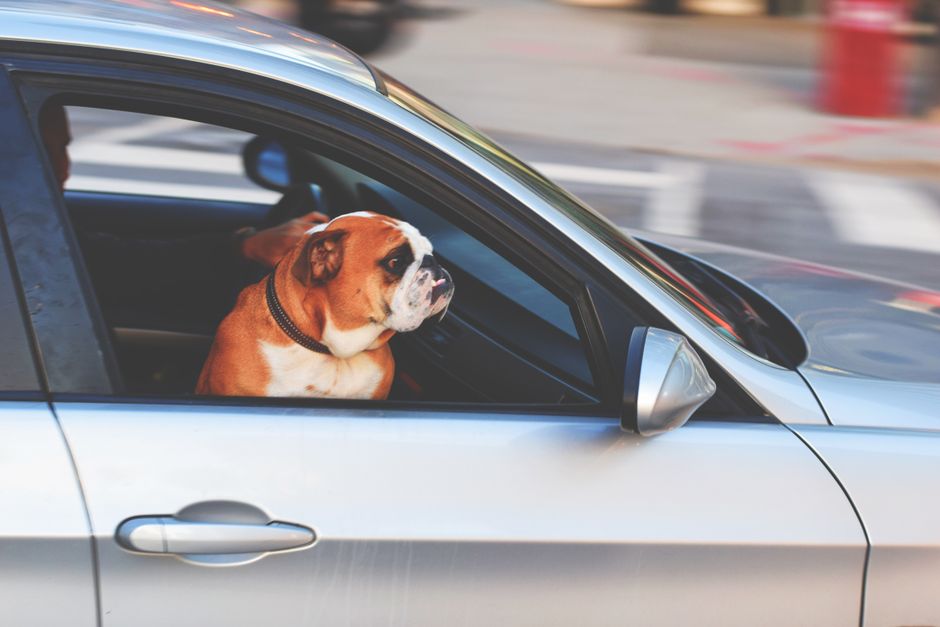
Ventilation: the car should be well ventilated, but without a draught blowing directly in your dog's face. A slightly open window is enough — wind blasting directly at high speed can irritate their eyes and ears.
Never leave them alone in a hot car. In summer, the interior of a parked car can exceed 50°C within 15 minutes, even in the shade and with windows slightly open. This can be fatal. If you need to get out, your dog gets out too — always.
Heat: The Number One Enemy in Summer
Heatstroke in the car is the leading cause of preventable death in dogs during summer travel. That's not an exaggeration.
Signs of heatstroke: very heavy panting, excessive drooling, staggering, red or purple gums, loss of consciousness.
If it happens: get to a vet immediately. While you're on your way: move the dog somewhere cool, wet their paws and belly with cool (not ice cold) water, and ventilate the space. Don't give them water to drink if they're semi-conscious — they could choke.
During the journey:
- Keep the air conditioning on or maintain sufficient natural ventilation
- At stops, find proper shade (parking facing north isn't enough — the car heats up all the same)
- Avoid long drives during the hottest part of the day (12:00-16:00 in July and August)
- Hot tarmac can burn their paw pads during stops — look for grass or dirt instead
Cold: Less Obvious, But Still a Risk
In winter, the other extreme. Short-haired dogs or those without an undercoat (greyhounds, whippets, Dalmatians, Boxers) can get very cold if the car is switched off and the journey goes on a while, or during a long stop in the mountains.
If you're travelling in winter to cold areas:
- Bring their blanket or coat if they normally wear one
- Don't leave them in a switched-off car for long in sub-zero temperatures
- In snowy conditions, protect their paw pads (the salt used to melt ice is irritating and can be toxic if licked)
Travel Sickness: How to Handle It Before and During the Journey
Dogs get car sick more often than people realise. The signs: drooling, repeatedly licking their lips, restlessness, yawning, and in more obvious cases, vomiting. Many dogs improve on their own with age and gradual exposure; others have an underlying tendency.
Before the journey:
- Fast for 3-4 hours beforehand
- Gradual habituation (short trips first)
- Position: some dogs feel less sick when facing forward — if they're in a harness on the back seat, try adjusting the seat angle if possible
During:
- Pull over if clear signs appear
- Ventilate the car
- Avoid letting them lean out of the window (this can actually increase motion sickness in some dogs)
- Talk to them calmly if they get anxious
If travel sickness is recurring and severe: speak to your vet. There are safe medication options that can completely transform the experience. You don't have to give up on travelling because of car sickness. More detail in our guide to [anxiety and travel sickness in the car].
Large Dogs in the Car: Specific Solutions
For the big ones — 25-30 kg and over — an in-cabin carrier is out of the question in most mid-sized cars. Here's what works:
A well-kitted-out boot: a properly anchored dividing grille, a non-slip mat or blanket that smells of them, and an additional anchor point if possible. Many large dogs are actually more comfortable in the boot than on the back seat — they have more room to stretch out.
Certified harness rated for their weight: there are harnesses specifically designed for large breeds, certified for dogs over 30 kg. Always check the maximum weight rating for the model you're looking at.
Giant breeds: Mastiffs, Great Danes, Saint Bernards — if the car doesn't have enough room for the dog to lie down comfortably, the journey is uncomfortable for them and potentially dangerous for everyone. A small hatchback is not the right vehicle for a 60 kg dog. Being honest about this saves a lot of trouble.
Long-Distance Routes: How to Plan It Properly
Before you leave, locate:
- Service areas along your route that have a green area for dogs — larger motorway services usually have them, though they're not always signposted. Waze and Google Maps show service areas; if it's a very long journey, call ahead or check the service area's website to confirm pet facilities.
- The nearest vet to your destination (and if possible, one with 24-hour emergency care). At queviajemasperro.com we have a directory of vets by province.
- Your pet-friendly accommodation confirmed before you leave — don't improvise finding somewhere to stay with a dog in the car.
At stops:
- Lead on at all times at service areas — there's a lot of traffic and other people's dogs around, which can cause friction
- Always pick up after your dog — the areas that welcome pets do so because previous owners have behaved responsibly
If Something Goes Wrong on the Way
Knowing what to do when the unexpected happens is part of trip preparation.
If your dog falls ill during the journey:
- Pull over at the first safe exit
- Water and shade first
- If symptoms are mild (drooling, tiredness), rest and keep an eye on them
- If there's repeated vomiting, breathing difficulties, loss of consciousness, or blood: veterinary emergency. Find the nearest clinic via Google Maps
If there's an accident:
- People come first. Once everyone is safe, attend to the dog
- Don't move them if you suspect internal injuries
- Call a vet before transporting them if it's not an emergency — they'll advise you on the safest way to do it
If the dog gets loose during a stop:
- Call the nearest animal shelter or municipal pound
- Post immediately in local Facebook groups
- The microchip is the key recovery tool — if it's registered, whoever finds them can trace you. Keep the chip number noted down along with a photo on your phone
What to Pack: Complete Car Checklist
- Your chosen restraint system (carrier + anchor, certified harness, or grille)
- Enough water for the journey and all stops
- Collapsible water bowl
- Their usual food and a food bowl
- Poo bags
- Blanket or mat that smells of them
- A toy or Kong (for those who need distraction)
- Wet wipes (for paws and unexpected messes)
- Vaccination record and documentation
- Up-to-date parasite prevention
- Regular medication if they take any
- Basic first aid kit: gauze, antiseptic, tick remover
- Vet's number at your destination written down
Crossing the Border by Car: What Changes
Driving to France, Portugal, Andorra, or any other EU country is perfectly doable, but there are a few things to sort out beforehand:
- European pet passport with a valid rabies vaccination (it must have been administered at least 21 days before travel and be a brand listed as approved)
- For Morocco: a veterinary health certificate no more than 10 days old + rabies vaccination + others depending on your specific destination
- For the UK post-Brexit: an AHC (Animal Health Certificate) + specific antiparasitic treatment against Echinococcus. More restrictive than the EU — check the APHA (Animal and Plant Health Agency) website for up-to-date requirements
There are no systematic border checks for private vehicles with France or Portugal within the Schengen Area, but that doesn't mean you can't be asked for documentation. Make sure everything is in order.
Full details in our guide to [documentation for travelling with your dog].
Frequently Asked Questions
Can I have my dog in the front passenger seat? Technically yes, if they're restrained with an approved harness. But it's not the best idea: the front airbag can cause serious injuries to your dog if it deploys. The back seat or boot are always safer.
How many hours can a dog manage in the car? With stops every hour and a half, most healthy dogs cope well with journeys of 6-8 hours. Older dogs, puppies, and brachycephalic breeds need more frequent breaks and extra attention in the heat.
Is the rabies vaccine mandatory for travelling within Spain? Not in every region, but most pet-friendly accommodation and campsites ask for it. And it's mandatory for crossing any border. Keep it up to date.
What happens if I'm stopped and the dog is unrestrained? €200 and 3 points off your licence. The DGT treats it in the same category as other driving distractions.
Are soft-sided carriers legal? Yes. The law doesn't regulate the material, only that the dog cannot move freely around the vehicle. A properly secured soft carrier complies perfectly.
Can I put the dog on the back seat without a harness if there are people on either side of them? No. The people beside them don't count as valid restraint according to the DGT. They need to be secured with a proper restraint system.
Does my dog have to go without food all day if it's a very long journey? That's neither necessary nor a good idea. Give them their last meal 3-4 hours before leaving and offer something light at the midday stop if the journey is going to take more than 6 hours. Water should always be available.
Is any special documentation needed for travelling by car within Spain? A registered microchip and an up-to-date vaccination record. Some accommodation also asks for a valid rabies vaccination. If you're crossing a border, you'll need the European pet passport.